Skip to content
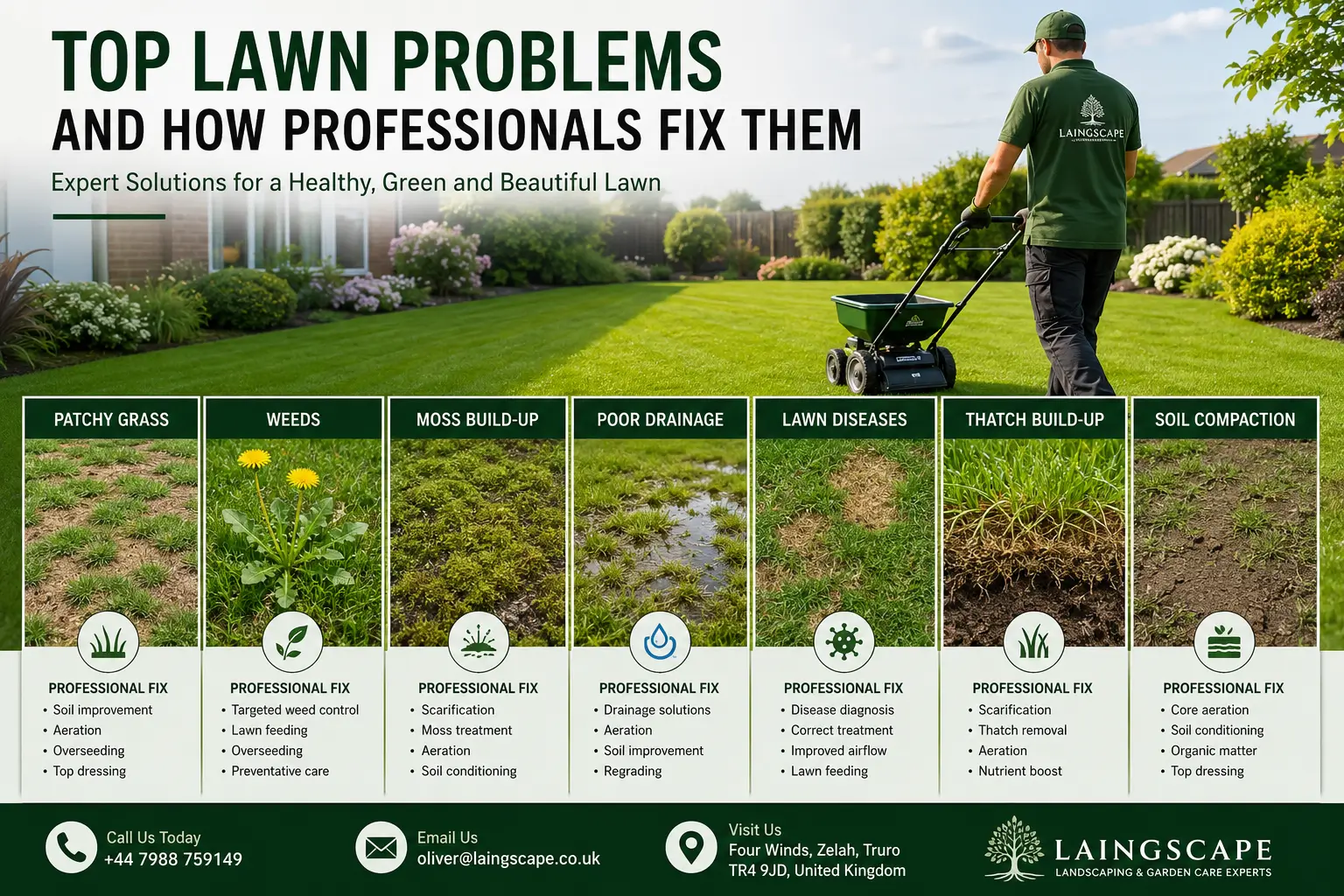
A healthy lawn is one of the first things people notice about a property. Whether it’s a family garden, a holiday let, or a commercial landscape, a lush green lawn creates a welcoming outdoor space and enhances kerb appeal. However, even well-maintained lawns can develop problems over time. Patchy grass, weeds, moss, poor drainage, and discolouration are all common issues that affect gardens across the UK.
Understanding the Top Lawn Problems and Professional Lawn Fixes UK Them can help you identify issues early and avoid costly repairs later. While some minor problems can be managed with regular maintenance, others require professional knowledge, specialist equipment, and the right seasonal approach.
At Laingscape, we have more than 20 years of experience maintaining lawns throughout Cornwall. We understand how the region’s mild, damp climate influences lawn health and know what it takes to keep grass looking its best throughout every season.
In this guide, we’ll explain the most common lawn problems, why they happen, and how professional lawn care services restore healthy, vibrant lawns that last.
Why Lawn Problems Are So Common in the UK
The UK’s climate provides excellent growing conditions for grass, but it also creates ideal conditions for weeds, moss, fungal diseases, and poor drainage.
Several factors contribute to lawn problems, including:
- Heavy rainfall
- Clay or compacted soil
- Lack of regular maintenance
- Incorrect mowing practices
- Nutrient deficiencies
- High foot traffic
- Poor drainage
In Cornwall, coastal weather and frequent rainfall can make lawns particularly vulnerable to moss growth and waterlogging. This is why preventative maintenance is often more effective than waiting until visible damage appears.
Patchy Grass and Bare Spots
One of the most frequent issues homeowners experience is patchy grass. Bare areas not only affect the appearance of your garden but also create opportunities for weeds and moss to establish themselves.
Common Causes
Patchy lawns can develop because of:
- Heavy foot traffic
- Pet damage
- Poor soil quality
- Drought stress
- Disease
- Insect activity
Sometimes multiple causes contribute to the same problem, making professional assessment especially valuable.
How Professionals Fix It
Rather than simply adding new grass seed, professional landscapers first identify the underlying cause.
The repair process may include:
- Testing soil condition
- Improving drainage
- Aerating compacted ground
- Applying quality topsoil
- Reseeding damaged areas
- Replacing severely damaged sections with fresh turf
Where lawns have extensive damage, complete Lawn Replacement often delivers better long-term results than repeated patch repairs.
Moss Taking Over the Lawn
Moss is one of the most common lawn problems found throughout Cornwall and other damp areas of the UK.
Although moss itself isn’t harmful, it competes with grass for space and usually indicates that growing conditions are less than ideal.
Why Moss Develops
Moss thrives when lawns have:
- Poor drainage
- Shade
- Acidic soil
- Compacted ground
- Weak grass growth
Many homeowners remove moss only to find it quickly returns because the underlying issue hasn’t been addressed.
Professional Treatment
Experienced lawn specialists don’t simply remove moss—they solve the conditions encouraging it to grow.
Professional treatment often includes:
- Lawn scarification
- Mechanical aeration
- Soil improvement
- Drainage correction
- Lawn feeding
- Overseeding
Improving airflow and strengthening healthy grass helps reduce future moss growth naturally.
According to the Royal Horticultural Society (RHS), improving drainage and increasing grass vigour are among the most effective long-term methods for controlling moss in domestic lawns.
Weeds That Compete With Healthy Grass
Weeds are another issue that regularly affects gardens throughout the UK. Dandelions, clover, daisies, buttercups, and plantains all compete with grass for sunlight, nutrients, and moisture.
Many weeds spread quickly if left untreated.
Why Weeds Appear
Weeds usually establish themselves when:
- Grass becomes thin
- Soil is unhealthy
- Lawn maintenance is irregular
- Bare patches develop
- Seeds are carried by wind or birds
Attempting to remove weeds manually often leaves roots behind, allowing them to regrow.
How Lawn Professionals Handle Weed Problems
Professional lawn care focuses on long-term weed management rather than temporary removal.
Treatment may include:
- Selective weed control
- Lawn feeding programmes
- Overseeding
- Improving grass density
- Correct mowing practices
A thick, healthy lawn naturally prevents many weeds from becoming established in the first place.
If weeds have become widespread, professional Weed Control services provide a targeted approach that protects surrounding grass while reducing invasive species safely and effectively.
Poor Drainage and Waterlogged Lawns
Standing water after rainfall is another problem commonly seen across Cornwall. A lawn that remains saturated for long periods becomes vulnerable to moss, disease, root damage, and soil compaction.
Signs of poor drainage include:
- Water pooling after rain
- Soft or muddy ground
- Slow grass growth
- Yellowing patches
- Increased moss
Professional landscapers investigate the cause before recommending the best solution.
Depending on site conditions, this may involve:
- Hollow-tine aeration
- Improving soil structure
- Installing drainage channels
- Regrading uneven ground
- Adding suitable topsoil
Addressing drainage problems early helps protect the long-term health of your lawn while reducing maintenance costs in future.
Lawn Diseases and Fungal Infections
Even a lawn that is watered and mowed regularly can become vulnerable to disease. Damp weather, poor air circulation, and excessive moisture create the perfect environment for fungal infections to develop.
Some of the most common lawn diseases in the UK include:
- Red Thread
- Fusarium Patch
- Dollar Spot
- Fairy Rings
Early signs often include discoloured patches, pink or red threads on the grass, or circular dead areas that gradually spread.
How Professionals Fix Lawn Diseases
Rather than applying treatments immediately, professionals first identify the specific disease affecting the lawn. Since different fungi require different management strategies, accurate diagnosis is essential.
Treatment may involve:
- Improving lawn drainage
- Adjusting mowing height
- Reducing excess thatch
- Applying balanced fertilisers
- Improving airflow around the lawn
- Using professional-grade treatments only when necessary
Healthy, well-fed grass naturally becomes more resistant to disease, reducing the need for repeated chemical applications.
Compacted Soil Preventing Healthy Growth
Soil compaction is a hidden problem that many homeowners overlook. Over time, regular foot traffic, garden machinery, pets, and heavy rainfall compress the soil, preventing air, water, and nutrients from reaching the roots.
Common signs include:
- Thin grass
- Slow growth
- Standing water
- Hard ground
- Difficulty pushing a garden fork into the soil
Professional Solutions
One of the most effective treatments is lawn aeration.
Professional aeration creates thousands of small holes throughout the lawn, allowing oxygen and moisture to reach the root zone more efficiently.
Additional improvements may include:
- Top dressing
- Soil conditioning
- Organic matter incorporation
- Seasonal feeding programmes
Aeration is particularly beneficial for lawns across Cornwall, where heavier soils and regular rainfall often contribute to compaction.
Yellow or Discoloured Grass
A lawn losing its rich green colour is usually a sign that something isn’t quite right.
Yellowing grass may result from:
- Nitrogen deficiency
- Poor drainage
- Heat stress
- Drought
- Overwatering
- Pet urine
- Root damage
Many homeowners assume extra watering will solve the issue, but this can sometimes make matters worse.
Professional Diagnosis
Experienced lawn specialists assess several factors before recommending treatment, including:
- Soil condition
- Moisture levels
- Root health
- Nutrient balance
- Recent weather patterns
Once the underlying cause is identified, treatments may include fertilisation, soil improvement, drainage correction, or overseeding where necessary.
Thatch Build-Up
Thatch is a layer of dead grass stems, roots, and organic material that develops between the soil and living grass.
A thin layer is beneficial, but excessive thatch can:
- Prevent water reaching roots
- Restrict nutrient absorption
- Encourage pests
- Increase disease risk
Professional Removal
Specialist scarifying equipment removes excess thatch without damaging healthy grass.
After scarification, professionals often recommend:
- Overseeding
- Lawn feeding
- Aeration
- Top dressing
Together, these treatments encourage stronger root development and healthier long-term growth.
Lawn Damage Caused by Pets
Pet owners often notice brown patches appearing after dogs regularly use the lawn.
Contrary to popular belief, the problem isn’t usually the grass itself but the concentrated nitrogen found in pet urine.
Other issues include:
- Worn pathways
- Digging damage
- Compacted areas
How Professionals Restore Pet-Damaged Lawns
Repair work typically includes:
- Removing damaged turf
- Improving soil quality
- Reseeding affected patches
- Installing fresh turf where necessary
- Advising on preventative measures
For severe damage, a complete Turf Installation may provide the quickest and most attractive solution.
Preventative Lawn Care Is Always More Cost-Effective
Many lawn problems develop gradually over months or even years.
Routine maintenance helps identify issues before they become expensive repairs.
A professional maintenance programme typically includes:
- Regular mowing
- Seasonal fertilising
- Weed management
- Moss control
- Scarification
- Aeration
- Soil improvement
- Ongoing lawn health inspections
Regular Lawn Care not only keeps your garden looking attractive but also strengthens grass against future weeds, diseases, and weather-related stress.
The Royal Horticultural Society (RHS) recommends seasonal lawn maintenance, including feeding, scarifying, and aeration, to promote healthier, more resilient lawns that cope better with changing weather conditions.
Let Laingscape Restore Your Lawn
If your lawn is struggling with moss, weeds, patchy grass, drainage problems, or poor growth, professional help can save you time, money, and frustration.
At Laingscape, we’ve been helping homeowners, holiday lets, and commercial properties across Cornwall achieve healthier, greener lawns for more than 20 years.
Whether you need regular Lawn Care, professional Weed Control, complete Lawn Replacement, or expert Turf Installation, we’ll recommend the most suitable solution for your garden.
Many of our customers discover us through recommendations, while others choose us after reading our excellent Google Business Profile and Trustpilot reviews, where clients regularly praise our reliable service, attention to detail, and quality workmanship.
Contact our team today for a free, no-obligation quotation and let us help you bring your lawn back to its best.
Conclusion
A beautiful lawn doesn’t happen by chance. It requires the right combination of regular maintenance, healthy soil, proper watering, and timely professional care. By understanding the Top Lawn Problems and How Professionals Fix Them, you can spot early warning signs before they develop into expensive repairs.
Whether you’re dealing with patchy grass, persistent weeds, moss, poor drainage, fungal diseases, or compacted soil, addressing the root cause is always more effective than treating the symptoms. Professional lawn care not only restores your lawn’s appearance but also improves its long-term health, helping it withstand changing weather conditions and everyday use.
If your lawn has lost its colour, become uneven, or simply isn’t performing as it should, investing in expert care today can save significant time and money in the future.
Ready to Transform Your Lawn?
A healthy, vibrant lawn enhances the appearance of your entire property and creates an outdoor space you’ll enjoy throughout the year.
At Laingscape, we’ve been providing trusted lawn and garden services across Cornwall for more than 20 years. Whether you need routine Lawn Care, effective Weed Control, complete Lawn Replacement, or professional Turf Installation, our experienced team delivers tailored solutions to suit your garden and budget.
Homeowners, holiday lets, and commercial property owners continue to choose Laingscape because of our reliable workmanship, local knowledge, and excellent customer service. We also encourage new customers to explore our Google Business Profile and Trustpilot reviews to see what local clients say about working with us.
If you’re ready to restore your lawn or want expert advice on keeping it healthy throughout the seasons, we’d be delighted to help.
Phone: +44 7988 759149
Email: oliver@laingscape.co.uk

Frequently Asked Questions
What are the most common lawn problems in the UK?
The most common lawn problems include patchy grass, moss, weeds, poor drainage, soil compaction, fungal diseases, yellowing grass, and excessive thatch build-up. Regular maintenance helps prevent many of these issues from becoming serious.
How do professionals repair patchy lawns?
Professionals identify the underlying cause before carrying out repairs. Depending on the condition of the lawn, solutions may include aeration, overseeding, soil improvement, top dressing, or complete turf replacement.
Why does moss keep coming back on my lawn?
Moss usually returns because the conditions that encourage its growth—such as poor drainage, shade, compacted soil, or weak grass—have not been addressed. Professional lawn care focuses on correcting these underlying issues rather than simply removing the moss.
Can weeds be removed without damaging the lawn?
Yes. Professional weed control treatments target common broadleaf weeds while protecting healthy grass. Combined with regular lawn maintenance, this provides longer-lasting results than manual weed removal alone.
How often should a lawn be aerated?
Most lawns benefit from aeration at least once a year. Lawns with heavy foot traffic or compacted soil may require more frequent treatment to improve drainage and encourage stronger root growth.
What causes yellow patches in a lawn?
Yellow patches may result from nutrient deficiencies, drought, overwatering, pet damage, poor drainage, fungal disease, or compacted soil. A professional assessment helps identify the exact cause before treatment begins.
Is it better to repair or replace a damaged lawn?
This depends on the extent of the damage. Minor problems can often be repaired through overseeding and lawn treatments, while heavily damaged lawns may benefit from complete lawn replacement or new turf installation.
How can I keep my lawn healthy throughout the year?
Regular mowing, seasonal feeding, aeration, scarification, weed control, and appropriate watering all contribute to a healthier lawn. Professional maintenance programmes help ensure your lawn receives the right care at the right time.
When is the best time to repair a lawn in the UK?
Spring and early autumn are generally the best times for lawn repairs because soil temperatures are ideal for grass growth and establishment. However, many maintenance tasks can be carried out throughout the year depending on weather conditions.
Why should I choose a professional lawn care service?
Professional lawn care saves time, delivers better long-term results, and helps prevent recurring problems. Experienced specialists can accurately diagnose lawn issues, recommend the most effective treatments, and keep your garden looking its best all year round.