Skip to content

How to Make a Decking Area Safer in Wet Weather
A garden decking area can be a great place to relax, entertain guests and enjoy the outdoors. However, when rain, moisture and damp conditions make the surface slippery, it can quickly become a safety concern. This is particularly important in Cornwall, where frequent rainfall and coastal weather can affect outdoor surfaces throughout the year.
Knowing how to make a decking area safer in wet weather helps reduce the risk of slips and falls while keeping your outdoor space attractive and practical. From regular cleaning and better drainage to choosing suitable decking materials, a few sensible improvements can make a noticeable difference.
Whether you have a small timber deck or a larger outdoor entertaining area, here are some practical ways to improve safety in wet conditions.
1. Clean Your Decking Regularly
Dirt, fallen leaves, algae and moss can collect on decking, particularly in shaded or damp areas. When these materials become wet, they can create a slippery surface underfoot.
Regular cleaning is one of the simplest ways to improve decking safety. Remove loose leaves, mud and other debris using a suitable outdoor brush. Pay particular attention to corners, gaps between boards and areas that receive little sunlight.
For a deeper clean:
- Sweep the decking regularly to remove loose debris.
- Use a decking cleaner suitable for your surface material.
- Follow the manufacturer’s instructions when applying cleaning products.
- Rinse the surface as directed and allow it to dry.
- Avoid using harsh chemicals that could damage the boards or surrounding plants.
Cleaning frequency will depend on the location, shade, surrounding trees and weather exposure. Decking beneath trees or close to planting beds may need more frequent attention.
2. Remove Moss and Algae Before They Build Up
Moss and algae are common problems in gardens that experience prolonged damp conditions. They can develop on timber and composite decking, especially where sunlight is limited and moisture remains on the surface.
A green or dark coating on decking should not be ignored. Even a small affected area can become slippery after rainfall.
Use a suitable decking treatment to remove algae and moss safely. Always check that the product is compatible with your decking material and follow the recommended application method.
Avoid aggressive scrubbing or unsuitable cleaning equipment that could damage the surface. If the growth is widespread or difficult to remove, professional advice may help identify the most appropriate cleaning approach.
Regular garden care can also reduce the build-up of leaves and vegetation around your decking. Laingscape provides garden maintenance in Cornwall, helping homeowners keep outdoor spaces tidy and manageable throughout the year.
3. Improve Drainage Around the Decking Area
Standing water is another factor that can make decking unsafe. If rainwater cannot drain away properly, it may remain on the surface or collect underneath the structure.
Poor drainage can also contribute to damp conditions, algae growth and deterioration of certain decking materials.
To improve drainage, consider the following:
- Keep gaps between decking boards clear where the design allows water to pass through.
- Remove leaves and debris that block drainage channels.
- Check that surrounding ground does not direct water towards the decking.
- Make sure nearby drains and outlets are clear.
- Look for areas where water regularly collects after rainfall.
The structure should also have appropriate ventilation beneath the boards, where its design requires it. Restricted airflow can allow moisture to remain trapped underneath the decking.
If water continues to collect despite regular maintenance, the underlying levels or drainage arrangement may need professional assessment. Avoid making structural changes without understanding how the existing deck is supported.
4. Consider Anti-Slip Decking Treatments and Strips
If your decking becomes slippery whenever it rains, an anti-slip treatment may be worth considering.
Some products are designed to improve grip on timber or composite surfaces. Anti-slip strips and inserts can also provide additional traction in areas where people are more likely to walk, such as steps, entrances and transitions between the deck and garden path.
Before choosing a product, check:
- Whether it is suitable for your decking material.
- Whether it is designed for outdoor and wet conditions.
- How it should be installed or applied.
- How often it needs to be maintained or replaced.
- Whether it affects the appearance or finish of the decking.
Do not assume that every anti-slip coating will work on every surface. Always follow the product manufacturer’s guidance and test compatibility where recommended.
For existing decking with significant wear, loose boards or surface damage, an anti-slip treatment may not be enough. Repairing or replacing damaged sections should take priority.
5. Check Decking Boards, Fixings and Steps
A safe decking area needs more than a non-slip surface. The structure itself must be stable and in good condition.
Wet weather can make existing defects more noticeable. Timber may become damaged over time, fixings can loosen and boards may move underfoot.
Inspect your decking periodically for:
- Cracked, split or rotten boards.
- Loose screws, nails or fixings.
- Raised edges and uneven surfaces.
- Unstable steps or handrails.
- Signs of movement in the supporting structure.
- Damaged edges and exposed sharp materials.
Pay particular attention to steps, as they can become hazardous when wet. Make sure they are stable, even and easy to identify.
If you notice significant structural damage, avoid using the affected section until it has been assessed and repaired by a competent professional. Do not simply cover a damaged board with an anti-slip product.
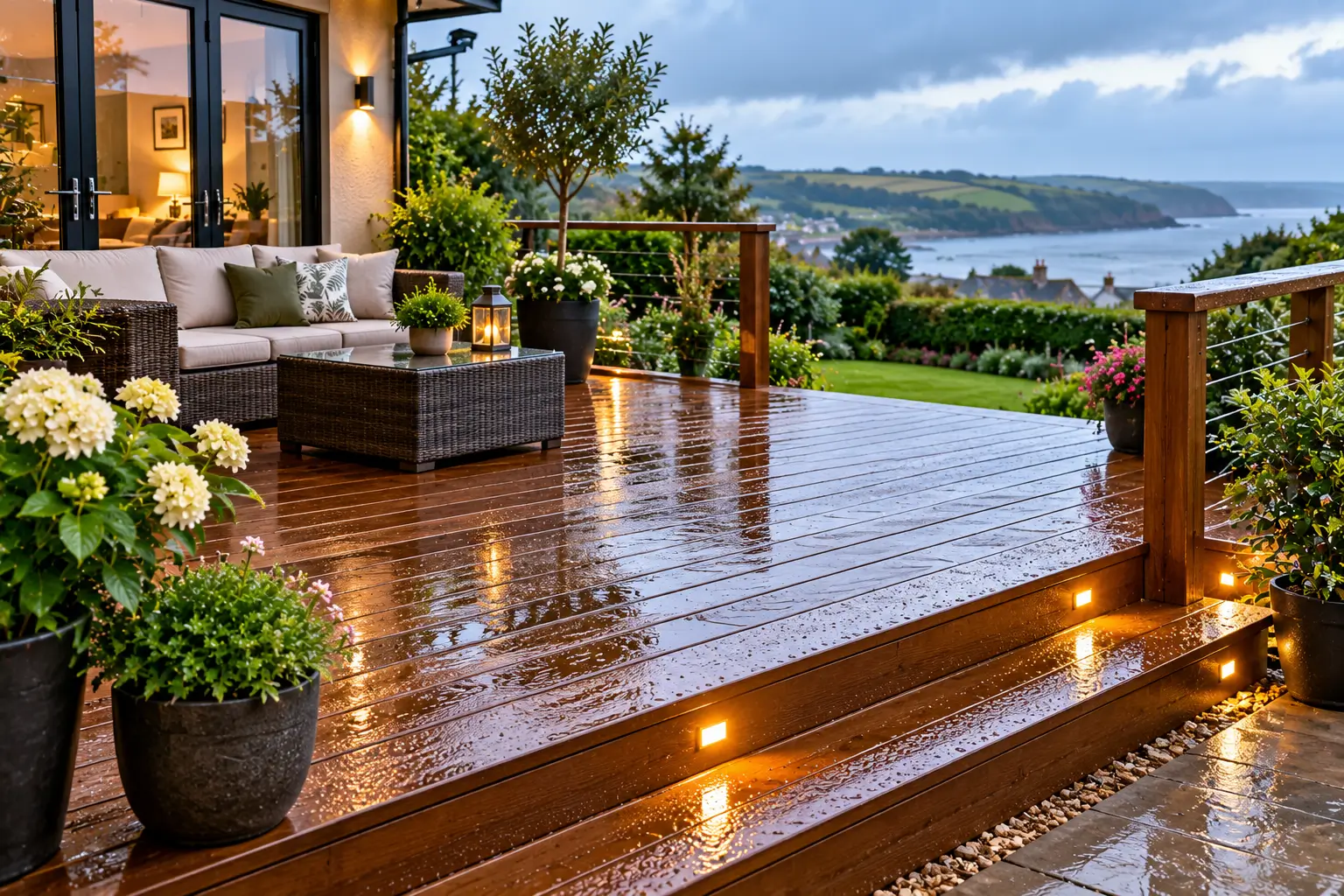
6. Improve Lighting Around Your Decking
Wet decking can be difficult to judge when visibility is poor. This is especially true during autumn and winter, when daylight hours are shorter and outdoor surfaces may remain damp throughout the day.
Suitable outdoor lighting can make steps, edges and changes in level easier to see.
Useful lighting options include:
- Wall-mounted lights near entrances.
- Low-level pathway lighting.
- Step lights to highlight changes in height.
- Motion-sensor lights for frequently used areas.
- Suitable outdoor lights around seating and access points.
Choose lighting designed for outdoor use and ensure it is installed safely. Position lights so that they provide useful visibility without creating glare or dark patches.
A well-planned garden layout can also make movement safer by keeping pathways clear and providing convenient access between the house, decking and other outdoor areas.
7. Keep Nearby Paths and Garden Areas Safe
Decking is often connected to lawns, patios, gravel areas or garden paths. Even if the decking itself is in good condition, the surrounding surfaces can create additional hazards during wet weather.
Mud, fallen leaves and standing water can make transitions between different areas slippery. Uneven paving and overgrown plants can also obstruct access.
Keep nearby pathways clear and check for loose paving, damaged edging and areas where water collects. Trim vegetation that blocks walkways and remove debris before it becomes compacted.
If your garden needs a wider improvement, Laingscape offers professional landscaping in Cornwall, including patios, pathways, decking, fencing and other outdoor features.
For homeowners planning a broader garden transformation, residential landscaping in Mid Cornwall can help create a more practical layout that connects different areas of the garden.
8. Choose Suitable Decking Materials for Cornwall’s Climate
If you are planning new decking or replacing an old structure, material selection is an important consideration.
Cornwall’s climate can expose outdoor surfaces to frequent rainfall, moisture, coastal winds and changing temperatures. The right material should suit the location and the level of maintenance you are prepared to undertake.
Common options include:
Timber decking: Natural timber creates a traditional appearance and can complement many garden styles. However, it requires suitable maintenance to protect it from moisture, surface deterioration and general weather exposure.
Composite decking: Composite boards are made from a combination of materials and are available in different finishes. Maintenance requirements vary by product, so check the manufacturer’s cleaning and care instructions.
Textured decking surfaces: Some decking products feature textured finishes designed to provide additional grip. Always check the manufacturer’s wet-weather performance information rather than relying on appearance alone.
Whichever option you choose, consider drainage, installation quality, ventilation and ongoing maintenance. A suitable material installed correctly is more likely to remain practical over time.
9. Create a Safer Decking Layout
The design of your decking area can influence how safely people use it in wet weather.
A well-planned layout should provide clear walking routes, sensible access points and enough room to move around outdoor furniture. Avoid placing furniture where it blocks steps or creates narrow passageways.
Consider these practical improvements:
- Keep the main walking route clear.
- Make steps and level changes easy to identify.
- Avoid loose outdoor rugs that may move when wet.
- Position furniture away from access points.
- Provide suitable handrails where needed.
- Use appropriate transitions between decking and other surfaces.
If you have children, older family members or visitors with limited mobility using the garden, think carefully about access and potential trip hazards.
For a decking project that forms part of a larger outdoor improvement, landscaping in St Austell is one of the local services available from Laingscape. Homeowners in coastal locations can also explore landscaping in St Mawes when planning improvements to their outdoor spaces.
10. Follow a Regular Wet-Weather Maintenance Routine
Decking safety is not a one-off task. Regular checks help you identify problems before they become more serious.
A simple maintenance routine can make outdoor areas easier to manage throughout the year.
Weekly or after heavy rainfall:
- Remove fallen leaves and loose debris.
- Check for standing water.
- Look for visibly slippery patches.
- Keep access routes clear.
Monthly:
- Inspect boards and fixings.
- Check steps, edges and handrails.
- Look for early signs of moss or algae.
- Clear nearby drainage points.
Seasonally:
- Carry out a more thorough clean.
- Check the condition of timber or composite surfaces.
- Review drainage and ventilation.
- Arrange repairs where necessary.
The exact schedule will depend on the decking material, garden location and exposure to weather. Decking in shaded or coastal areas may require more frequent attention.
If maintaining the wider garden becomes difficult, regular garden maintenance in Cornwall can help keep surrounding lawns, borders and outdoor areas in good condition.
Why Professional Decking Installation Matters
A safe decking area starts with good planning and proper installation. Ground preparation, structural support, board spacing, drainage and access all influence how well the finished area performs.
Choosing an experienced landscaping professional can help you consider these details before work begins. It is also important to use suitable materials and follow relevant installation guidance.
Laingscape provides landscaping and decking services across Mid Cornwall and surrounding areas. With over 20 years of experience, the team helps homeowners create practical outdoor spaces tailored to their gardens and requirements.
You can explore the Laingscape landscaping and garden services to learn more about available options.
Frequently Asked Questions
Why does decking become slippery when wet?
Decking can become slippery when water combines with algae, moss, dirt or other surface contaminants. Shaded areas that remain damp for long periods are particularly susceptible.
How can I make wooden decking less slippery?
Start by removing leaves, dirt, moss and algae using a suitable cleaning method. You can also consider compatible anti-slip treatments or strips. Damaged or rotten boards should be repaired or replaced rather than simply treated.
Is composite decking safer than timber in wet weather?
Not automatically. Wet-weather grip varies between individual products and surface finishes. Check the manufacturer’s performance information and maintenance recommendations before choosing decking.
How often should decking be cleaned?
There is no single schedule for every garden. Decking exposed to trees, shade and frequent moisture may need cleaning more often. Regular sweeping and prompt removal of debris can help prevent build-up.
Can poor drainage make decking unsafe?
Yes. Standing water can contribute to slippery conditions and may create moisture-related problems around the structure. Check drainage routes and seek professional advice if water continues to collect.
Does Laingscape provide decking services in Cornwall?
Laingscape offers landscaping services that include decking installation, patios, pathways and other outdoor improvements. The team covers Mid Cornwall and surrounding areas, including Truro, Newquay, Falmouth, St Austell and St Mawes.
Final Thoughts
Making a decking area safer in wet weather involves more than simply cleaning the boards. Regular maintenance, effective drainage, suitable materials, stable steps and good lighting all contribute to a safer outdoor environment.
By dealing with moss and algae early, checking for structural damage and keeping surrounding pathways clear, you can reduce common wet-weather hazards and make your garden more comfortable to use throughout the year.
If you are considering new decking or want to improve an existing outdoor space, Laingscape can help you explore suitable landscaping options across Cornwall.
Contact Laingscape for a free, no-obligation quotation:
- Phone: 07988 759149
- Email: oliver@laingscape.co.uk
- Website: https://laingscape.co.uk/