Skip to content

Common Garden Fence Problems and Solutions Every UK Homeowner Should Know. A well-built garden fence does much more than mark your property boundary. It provides privacy, improves security, protects your garden from strong winds, and enhances your home’s kerb appeal. However, like every outdoor structure, fences are constantly exposed to the unpredictable British weather, moisture, strong winds, insects, and everyday wear and tear.
Understanding Common Garden Fence Problems and Solutions helps homeowners identify small issues before they become expensive repairs. Whether you have traditional timber fencing, decorative panels, or modern composite fencing, regular inspection and maintenance can significantly extend its lifespan.
In this guide, we’ll explore the most common fence problems found in UK gardens, explain why they happen, and share practical solutions to keep your fence looking great for years. If your fence has reached the end of its life, we’ll also explain when replacing it may be the better long-term investment.
Why Garden Fences Require Regular Maintenance
Garden fences remain outdoors every day of the year. Unlike indoor structures, they face constant exposure to rain, frost, sunlight, strong winds, and changing temperatures.
Over time, even high-quality materials begin to deteriorate without proper care.
Routine maintenance helps:
- Extend the life of your fence
- Prevent costly repairs
- Improve property appearance
- Maintain garden security
- Protect timber from decay
- Reduce storm damage
Many expensive fencing problems begin as small, easily repairable issues that are simply overlooked.
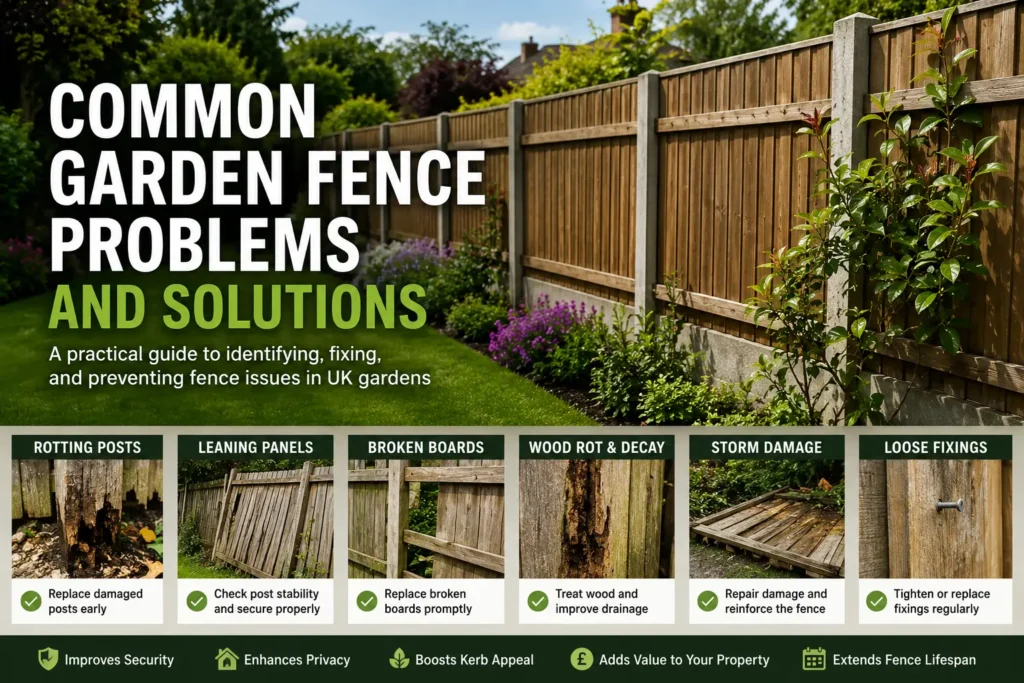
Rotting Timber Posts
One of the most frequent issues homeowners experience is timber posts beginning to rot at ground level.
Although the fence panels may still appear solid, the supporting posts often weaken first because they remain in constant contact with damp soil.
Common Causes
- Poor drainage around the posts
- Continuous exposure to moisture
- Ageing timber
- Lack of wood treatment
- Water collecting around concrete bases
Solutions
Small areas of surface damage may be treated with quality wood preservatives.
However, if the post has become structurally weak, replacement is usually the safest option. Replacing individual posts early often prevents the need for an entirely new fence.
Professional installation with proper drainage and pressure-treated timber greatly reduces future problems.
Loose or Leaning Fence Panels
A fence that starts leaning rarely fixes itself.
Leaning panels usually indicate an issue beneath the surface rather than with the panel itself.
Possible Causes
- Rotten fence posts
- High winds
- Poor installation
- Weak foundations
- Soil movement
In areas such as Cornwall, where coastal winds can be particularly strong during winter, leaning fences are fairly common after storms.
Best Solution
Begin by checking whether the post remains secure.
If only the panel is damaged, replacing a single panel may be sufficient.
If the supporting post has shifted, rebuilding that section properly will provide a much longer-lasting solution than temporary braces.
Broken Fence Panels After Storms
Strong winds remain one of the biggest causes of fencing damage throughout the UK.
Large solid fence panels create wind resistance, placing enormous pressure on posts and fixings during storms.
Typical storm damage includes:
- Cracked panels
- Missing boards
- Broken rails
- Split timber
- Fallen fence sections
After severe weather, it’s worth inspecting the entire fence—even if damage isn’t immediately visible.
Loose fixings or minor cracks can quickly worsen if left untreated.
The UK Met Office regularly provides weather warnings that can help homeowners prepare their gardens before periods of high winds.
Wood Rot and Fungal Decay
Timber fencing naturally absorbs moisture over time.
Without regular treatment, this creates the perfect environment for fungal decay.
Signs include:
- Soft timber
- Dark staining
- Crumbling wood
- Surface mould
- Mushrooms growing nearby
Applying a quality exterior wood treatment every few years helps protect timber against moisture penetration.
Regular cleaning also removes dirt and organic material that encourages fungal growth.
Loose Nails, Screws and Fixings
Many fencing issues develop simply because fixings loosen over time.
Seasonal expansion and contraction of timber gradually causes nails and screws to work loose.
You may notice:
- Wobbling panels
- Rattling during windy weather
- Gaps appearing between boards
- Movement around rails
Fortunately, this is one of the easiest problems to fix.
Replacing old fixings with galvanised or stainless-steel screws provides greater long-term durability and better resistance to corrosion.
Fence Discolouration and Weathering
Even structurally sound fences gradually lose their original appearance.
Exposure to sunlight, rain, frost, and pollution slowly fades timber, causing it to turn grey.
Although this is usually cosmetic, untreated weathering can eventually lead to more serious deterioration.
Fortunately, restoring appearance is straightforward.
Cleaning the timber thoroughly before applying stain, paint, or protective treatment helps restore both colour and weather resistance.
Many homeowners choose natural wood stains that enhance the timber grain while providing additional protection against UV damage.
Insect Damage
While less common than moisture-related problems, insects can also damage timber fencing.
Wood-boring insects and certain beetles occasionally attack untreated timber, especially where damp conditions already exist.
Early warning signs include:
- Small round holes
- Fine sawdust around boards
- Weak timber sections
- Crumbling wood
Professional inspection may be worthwhile if widespread insect activity is suspected.
Pressure-treated timber is far less attractive to wood-boring insects and provides much better long-term protection.
Cracked Concrete Fence Posts
Although timber fencing often receives the most attention, concrete fence posts can also develop problems over time.
Cracks may appear because of ground movement, frost, accidental impact, or natural ageing. While small hairline cracks are usually cosmetic, larger fractures can weaken the entire fence line.
Warning Signs
- Visible vertical cracks
- Posts moving when pushed
- Fence panels becoming loose
- Chipped or broken concrete
The Best Solution
Minor cracks can sometimes be repaired using specialist concrete repair products. However, if the post has shifted or the crack extends through the full depth, replacement is normally the safest and most cost-effective option.
Replacing one damaged post is often far less expensive than rebuilding an entire fence later.
Poor Drainage Around Fence Lines
One of the most overlooked causes of fencing damage is poor drainage.
Standing water around fence posts accelerates timber rot, weakens concrete foundations, and softens surrounding soil. Over time, this causes posts to lean and reduces the fence’s overall stability.
Gardens with heavy clay soil or poor drainage are particularly vulnerable after prolonged rainfall.
How to Improve Drainage
Simple improvements can make a significant difference:
- Remove soil built up against fence panels.
- Ensure water drains away from fence posts.
- Keep gravel boards clear of debris.
- Avoid allowing plants to trap moisture against timber.
- Install suitable drainage where water regularly collects.
Good drainage helps protect your fence throughout the year while reducing long-term maintenance costs.
Fence Movement After Heavy Rain
Heavy rainfall can dramatically change soil conditions.
When saturated soil expands or softens, fence posts may begin to shift. This is especially common on sloping gardens or properties with unstable ground.
You might notice:
- Fence sections leaning slightly
- Posts becoming loose
- Small gaps appearing between panels
- Gates becoming difficult to close
If movement is identified early, repairs are usually straightforward. Leaving the problem until the fence has significantly leaned often results in much larger repair bills.
Overgrown Plants Damaging Fences
A healthy garden looks attractive, but uncontrolled plants can shorten the life of your fence.
Climbing plants, dense shrubs, and overgrown hedges trap moisture against timber while adding extra weight to fence panels.
Common offenders include:
- Ivy
- Bramble
- Wisteria
- Climbing roses
- Fast-growing hedges
While these plants may look attractive, they should be managed carefully to avoid damaging the fence beneath.
Regular pruning helps maintain airflow around the structure and allows timber to dry naturally after rain.
Repair or Replace? Knowing the Right Time
Many homeowners wonder whether repairing an old fence is worthwhile or whether complete replacement offers better value.
Generally, repairs make sense when:
- Only one or two panels are damaged.
- Fence posts remain secure.
- The overall structure is still strong.
- Damage is localised.
Replacement is usually the better investment when:
- Multiple posts have rotted.
- Large sections are leaning.
- The timber has widespread decay.
- Repairs would cost almost as much as a new installation.
An experienced fencing contractor can assess the condition of your fence and recommend the most practical solution based on its age and structural integrity rather than replacing it unnecessarily.
Preventative Maintenance That Saves Money
Many of the issues covered in this guide are preventable with routine care.
A simple maintenance schedule can significantly increase the lifespan of your fencing.
Annual Fence Maintenance Checklist
- Inspect posts for movement.
- Tighten loose screws and fixings.
- Replace damaged boards promptly.
- Remove moss and algae.
- Trim plants away from fencing.
- Apply protective wood treatment every few years.
- Check drainage around posts.
- Inspect after severe storms.
Spending a small amount of time each year on maintenance can prevent expensive repairs in the future.
Looking for Professional Garden Fencing Services?
If your fence has been damaged by storms, age, or general wear, professional advice can save you both time and money.
At Laingscape, we provide expert Garden Fencing services across Mid Cornwall, helping homeowners install durable, attractive fencing designed to withstand the local climate. Whether you need a single fence panel replaced or a completely new boundary fence, our experienced team delivers quality workmanship with attention to every detail.
To keep your outdoor space looking its best throughout the year, we also offer professional Garden Maintenance services, ensuring your fencing, borders, hedges, and lawns remain in excellent condition.
Many of our customers choose us after reading our positive Google Business Profile reviews and Trustpilot feedback, giving them confidence that they’re working with a trusted local landscaping company.
Whether you’re planning a new fencing project or repairing an existing one, we’re always happy to provide honest advice and a free, no-obligation quotation.
Contact Laingscape
Phone: +44 7988 759149
Email: oliver@laingscape.co.uk
You can also explore our Garden Fencing and Garden Maintenance service pages for more information about how we can help improve your outdoor space.
Conclusion
Understanding Common Garden Fence Problems and Solutions allows homeowners to protect one of the most important features of their outdoor space. Small issues such as loose fixings, leaning posts, timber rot, or poor drainage may seem minor at first, but addressing them early can prevent costly repairs and significantly extend the life of your fence.
Regular inspections, routine maintenance, and using quality materials all contribute to a stronger, longer-lasting boundary that not only improves security but also enhances the appearance of your garden.
If your fence has suffered storm damage, reached the end of its lifespan, or simply no longer complements your outdoor space, professional advice can help you make the right decision. Investing in expert installation ensures your new fence is built to withstand the UK’s changing weather conditions while adding lasting value to your property.
For further guidance on caring for timber outdoors, the Royal Horticultural Society (RHS) offers practical gardening advice, while GOV.UK provides useful information regarding property boundaries and planning considerations where applicable.
Frequently Asked Questions
What are the most common garden fence problems?
The most common issues include rotting fence posts, leaning panels, broken boards, loose fixings, storm damage, wood rot, poor drainage, and weather-related deterioration. Regular inspections help identify these problems before they become more serious.
How can I stop my timber fence from rotting?
Treating timber with a high-quality exterior wood preservative, improving drainage around fence posts, and preventing constant moisture build-up are the most effective ways to reduce the risk of rot.
Why is my garden fence leaning?
A leaning fence is usually caused by weakened posts, unstable foundations, saturated soil, or storm damage. In many cases, replacing damaged posts will restore the fence’s stability.
Is it better to repair or replace a damaged fence?
If only one or two panels are damaged and the supporting structure remains strong, repairs are often sufficient. However, if multiple posts have rotted or large sections are unstable, replacing the fence usually offers better long-term value.
How long should a wooden garden fence last?
A professionally installed, pressure-treated timber fence can often last between 15 and 20 years or longer with regular maintenance and appropriate protective treatments.
How often should a garden fence be maintained?
It’s recommended to inspect your fence at least twice a year and after severe storms. Cleaning, tightening fixings, and applying protective treatments every few years will help extend its lifespan.
Can strong winds damage even new fences?
Yes. Severe weather can affect fences of any age if they are exposed to high winds. Correct installation, strong foundations, and quality materials greatly improve wind resistance.
Does poor drainage affect fencing?
Yes. Standing water softens soil around fence posts, accelerates timber decay, and weakens foundations. Improving drainage is one of the best ways to protect your fence over the long term.
Which type of fencing is best for UK weather?
Pressure-treated timber fencing remains one of the most popular choices because it offers durability, natural appearance, and excellent performance when properly maintained. Composite fencing is another low-maintenance option for homeowners seeking long-term durability.
Do professional fencing services save money in the long run?
In many cases, yes. Professional installation ensures correct foundations, accurate alignment, quality fixings, and proper drainage, reducing the likelihood of premature repairs or replacement.