Skip to content

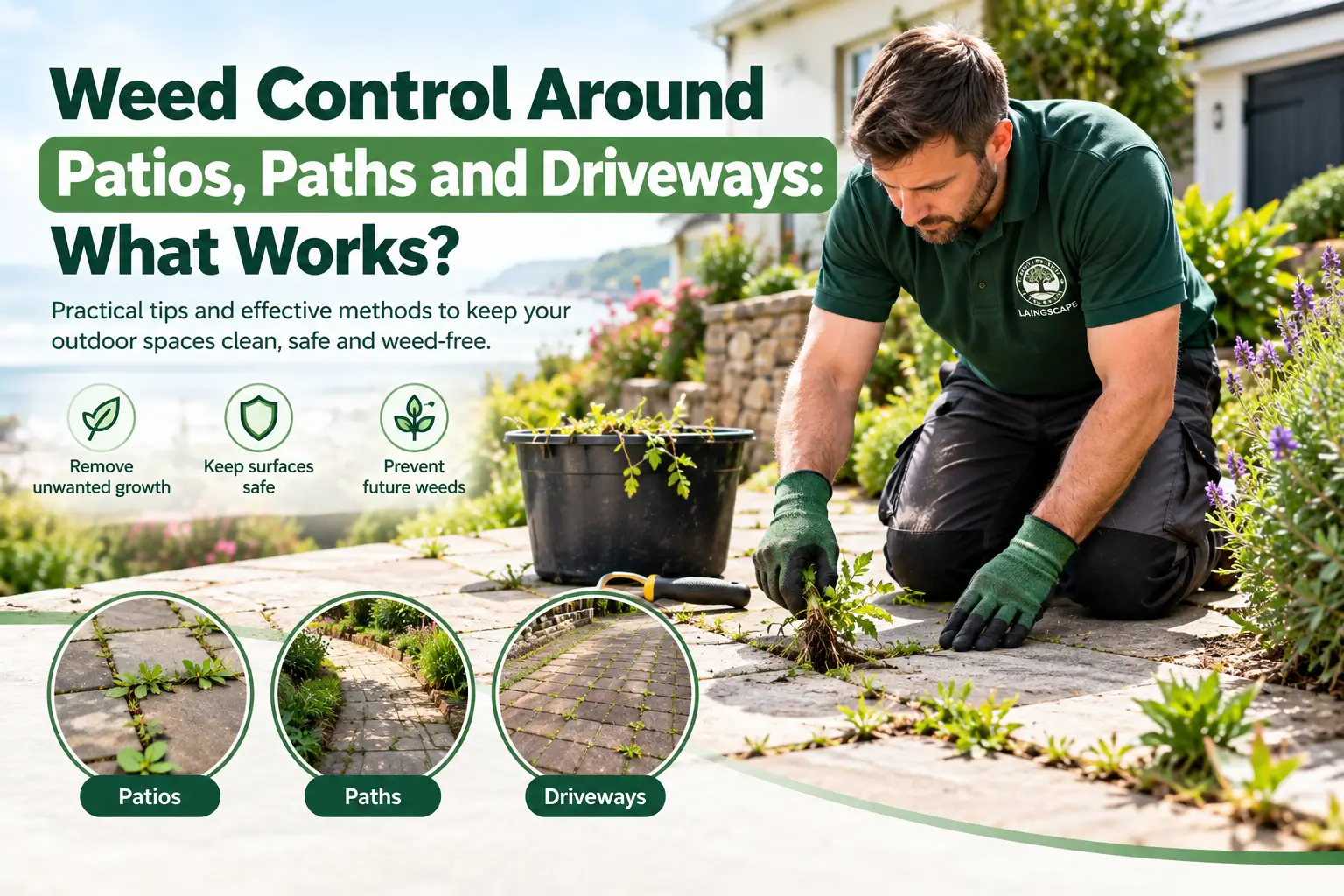
Weeds growing between patio slabs, along garden paths and across driveway edges can make an otherwise tidy garden look neglected. They can also trap debris, spread into borders and contribute to slippery or uneven surfaces.
The good news is that you do not always need strong chemicals to manage them. The best approach depends on the type of weed, the surface material and how regularly you maintain the area.
In this guide, we explain weed control around patios, paths and driveways, covering practical removal methods, prevention tips and when professional garden maintenance may help.
Why Do Weeds Grow Between Paving and Driveways?
Weeds often establish in small gaps where soil, dust, leaves and other organic material collect. Seeds can arrive on the wind or be carried by birds, while some plants spread from nearby lawns and borders.
Moisture and limited maintenance can encourage further growth. In Cornwall, damp conditions and shaded areas may also contribute to moss and algae on hard surfaces.
1. Remove Weeds by Hand
For small areas, manual removal is often the simplest place to start.
A patio weeding knife or narrow hand tool can help remove plants growing between paving slabs. Try to remove as much of the root as possible, particularly when dealing with established weeds.
For better results:
- Remove weeds while they are young.
- Work carefully to avoid damaging paving joints.
- Clear loose soil and plant debris from gaps.
- Check the same area regularly for regrowth.
Annual weeds are often easier to remove than established perennial weeds, which may regrow from remaining roots.
2. Use Brushing and Scraping for Hard Surfaces
A stiff outdoor brush can remove small seedlings, loose soil and debris from patios, paths and driveways. For weeds growing between slabs, a suitable scraper can help loosen the material around the plant.
Brush regularly, particularly around edges where debris tends to collect. However, avoid aggressive scraping that could damage pointing, jointing compound or the surface itself.
If the joints are already deteriorating, consider repairing them after removing the weeds. Simply clearing visible growth may not address the underlying problem.
3. Are Natural Weed Control Methods Effective?
Non-chemical methods can be useful for routine garden maintenance, especially when weeds are limited to small areas.
Hand removal, repeated cutting and suitable mechanical tools can help control unwanted growth without relying on herbicides. The RHS provides further advice in its guide to non-chemical weed control.
Avoid pouring salt, bleach or homemade chemical mixtures onto paving. These substances can affect surrounding plants, soil and drainage, and may damage surfaces.
Boiling water can cause burns and may damage some materials or nearby plants. Weed burners also present fire risks and may not control deep-rooted weeds effectively.
4. Prevent Weeds from Returning
Removing visible weeds is only part of the solution. Prevention helps reduce the time spent repeating the same task.
Useful habits include:
- Sweep patios and paths to remove leaves and loose soil.
- Keep paving joints in good condition.
- Trim grass and plants that spread over path edges.
- Remove young weeds before they produce seeds.
- Address gaps or damaged joints where soil accumulates.
- Improve drainage where standing moisture is a recurring problem.
If your driveway or patio has extensive damaged joints, consider whether repairs are needed rather than relying on repeated weed removal.
For larger outdoor improvements, explore our Driveway Installation in Mid Cornwall service.
5. What About Moss, Algae and Slippery Patios?
Moss and algae are different from typical rooted weeds, but they can also affect hard surfaces. They are more likely to develop in damp, shaded areas with limited air circulation.
The RHS explains that algae, moss and similar growths can make patios, paths and steps slippery. Read its guidance on algae, lichens and moss on hard surfaces.
Regular sweeping and appropriate surface cleaning can help manage build-up. Choose a cleaning method suitable for your paving material, and take care around nearby plants and drainage points.
Prioritise areas used frequently, especially steps, entrances and pathways that become slippery when wet.
6. When Is Professional Garden Maintenance Worth Considering?
If weeds keep returning, garden borders have become overgrown or several paved areas need attention, a more consistent maintenance routine may be worthwhile.
Laingscape provides gardening and landscaping services across Cornwall. Depending on your needs, professional support may help you manage weeds, maintain lawn edges and keep outdoor areas looking tidier.
Our regular garden maintenance service in Cornwall is a useful starting point for ongoing garden care. You can also explore our lawn mowing services in Cornwall to help keep grass under control around garden edges.
For seasonal work, our guide to Autumn Garden Maintenance in Cornwall offers further ideas for preparing your garden for cooler, wetter weather.
7. Improve the Wider Garden Around Your Paths
Weed control is easier to manage when the surrounding garden is also in good condition. Overgrown borders, untidy lawn edges and neglected planting areas can allow vegetation to spread towards paved surfaces.
If the garden needs a more substantial tidy-up, our Garden Clearance in Mid Cornwall service may be relevant.
For a wider redesign, explore Residential Landscaping in Mid Cornwall, Landscaping in St Mawes or Landscaping in St Austell.
If your project also includes a new lawn, consider Lawn Installation in Cornwall, New Turf Installation in Cornwall, or our Mid-Range Turf in Cornwall options.
For local lawn projects, you can also explore Turf Installation in St Austell and Turf Laying in St Austell.
Need Help Keeping Your Garden Under Control?
If weeds, overgrown borders or untidy outdoor areas are taking up too much of your time, Laingscape can help you discuss suitable gardening and landscaping options.
Visit our services page to explore the available services, or contact the team to discuss your requirements. You can also view our Google Business Profile for business information and available customer reviews.
Contact Laingscape for a free, no-obligation quotation.
Conclusion
Effective weed control around patios, paths and driveways starts with choosing a method that suits the surface and the type of growth. Hand removal, regular brushing, sound paving joints and consistent maintenance can all help reduce unwanted weeds.
Where moss or algae makes a surface slippery, suitable cleaning and attention to drainage are equally important. For persistent problems or a garden that needs wider improvements, a regular maintenance plan may save time in the long run.
A little attention throughout the year can help keep your paths, patio and driveway cleaner, safer and easier to maintain.
Frequently Asked Questions
1. What is the best way to remove weeds between patio slabs?
Use a suitable weeding knife or narrow scraper to remove the plant and as much of its root as possible. Brush away loose debris and check the joints regularly for regrowth.
2. How do I stop weeds growing in my driveway?
Sweep regularly, remove young weeds promptly and keep joints in good condition. If the surface or jointing material is damaged, repairs may help address places where soil and seeds accumulate.
3. Does boiling water kill weeds between paving stones?
Boiling water can damage exposed plant tissue, but it may not kill deep roots. It also presents a serious scalding risk and can affect nearby plants or sensitive materials.
4. Is salt a good natural weedkiller?
Salt is not recommended for routine garden weed control. It can affect soil and nearby plants, and may be carried into surrounding areas by rainwater.
5. Why do weeds keep returning between paving slabs?
Seeds may continue to arrive on the wind, while roots left behind can produce new growth. Soil and organic debris in the joints also provide conditions for fresh seedlings.
6. Can pressure washing remove weeds?
Pressure washing may dislodge small weeds and remove debris, but it can also damage paving joints or displace jointing material. Use an appropriate setting and consider the surface before cleaning.
7. How often should I remove weeds from paths and patios?
Check paved areas regularly during the main growing season, particularly in spring and summer. Removing young weeds early usually makes the task easier.
8. Can garden maintenance help prevent weeds around driveways?
Regular maintenance can reduce debris, manage spreading vegetation and help identify damaged joints. However, new weed seeds can still arrive, so occasional checks and removal remain necessary.