Skip to content

Hiring a professional gardener should be about more than simply getting the lawn cut. A good garden visit should leave your outdoor space healthier, tidier and easier to manage, while also identifying small problems before they become expensive ones.
But exactly what should a professional gardener do during a garden visit?
The answer depends on the garden, the season and the agreed maintenance plan. A small urban garden may need mowing, edging and weeding, while a larger Cornwall garden could require hedge trimming, pruning, brushcutting, clearance and seasonal work.
Professional gardening is not about doing the same jobs every time. It is about understanding what the garden needs at that particular stage of the year and carrying out the right work carefully.
What Happens During a Professional Garden Visit?
A good garden visit normally begins with a quick assessment of the outdoor space.
The gardener should look at the condition of the lawn, borders, hedges, plants, paths and other areas before deciding where attention is needed.
This helps prioritise the available time.
For example, if the lawn has grown rapidly after wet weather, mowing may be more important than spending the entire visit on minor border maintenance.
Similarly, during autumn, clearing leaves and managing seasonal growth may become a greater priority.
The aim should be to leave the garden looking noticeably better while maintaining its long-term health.
Lawn Mowing and Lawn Care
For many homeowners, lawn care is one of the most visible parts of regular garden maintenance.
A professional gardener should consider the lawn’s condition before mowing rather than simply cutting it as short as possible.
The RHS recommends adjusting mowing frequency according to grass growth, weather and the type of lawn. For a traditional lawn, weekly or fortnightly mowing is generally appropriate during the main growing season.
A professional visit may include:
- Mowing
- Lawn edging
- Removing excessive clippings
- Checking for bare areas
- Identifying weeds or moss
- Adjusting mowing height when appropriate
A good gardener should also avoid mowing when ground conditions are unsuitable, particularly when the soil is very wet.
Weeding and Border Maintenance
Weeds can quickly make an otherwise well-maintained garden look neglected.
During a professional visit, weeds should be identified and removed from suitable areas before they become established.
This may involve hand weeding, hoeing, cutting or other appropriate non-chemical methods.
The RHS notes that weeds can often be managed without weedkillers through techniques such as hand removal, repeated cutting, smothering and barriers.
Border maintenance can also include:
- Removing dead or unwanted growth
- Clearing debris
- Tidying around plants
- Cutting back suitable growth
- Maintaining clear edges
- Checking plant health
The objective isn’t to make every border look artificially perfect. Good maintenance should support healthy planting while keeping the garden attractive and manageable.
Hedge Trimming and Pruning
Hedges and shrubs often require seasonal attention rather than being cut whenever they look slightly untidy.
A professional gardener should consider the plant, its growth habit and the appropriate time of year before carrying out significant pruning.
Routine hedge work may include light trimming, shaping and reduction where appropriate.
Pruning can also help maintain the structure and appearance of established shrubs.
However, not every plant should be treated in the same way. Timing matters, particularly where flowering, fruiting or wildlife considerations are involved.
If substantial tree work is required, this may fall outside ordinary garden maintenance and should be handled by an appropriately qualified specialist.
Seasonal Garden Jobs
One of the biggest differences between professional gardening and simply mowing the lawn is understanding seasonal priorities.
A garden changes throughout the year, so maintenance should change with it.
Spring
Spring visits may focus on clearing winter debris, controlling new weed growth, preparing borders and getting lawns ready for the growing season.
Summer
Mowing, edging, weeding, hedge maintenance and general presentation can become the priority as growth increases.
Autumn
Leaf clearance, pruning and preparing parts of the garden for winter often become more important.
Winter
Growth generally slows, but gardens may still need hedge work, pruning, clearance and general tidying when weather conditions allow.
A professional maintenance plan should therefore be flexible rather than treating every visit as identical.
Garden Clearance and Overgrown Areas
Not every garden starts in perfect condition.
Sometimes a property has been neglected for months or even years, leaving overgrown borders, long grass, dense vegetation and accumulated garden waste.
In these circumstances, routine maintenance may not be enough initially.
A professional gardener may need to carry out brushcutting, strimming, pruning and clearance to bring the garden back to a manageable condition.
Once the initial work is completed, regular visits can help prevent the same situation from developing again.
This is particularly useful for homeowners who have recently moved into a property or have struggled to keep up with garden work due to time constraints.
Checking the Garden for Potential Problems
A useful garden visit should also involve observation.
An experienced gardener may notice problems that aren’t immediately obvious to the homeowner.
These could include:
- Damaged fencing
- Poor drainage
- Compacted soil
- Dying plants
- Excessive weed growth
- Damaged lawn areas
- Overgrown hedges
- Storm damage
Spotting these issues early can make them easier to address.
For example, identifying a leaning fence post before a storm may allow a homeowner to repair it before a larger section of fencing collapses.
Similarly, noticing persistent standing water can highlight a drainage issue that needs further investigation.
Removing Garden Waste
Garden maintenance can create a surprising amount of waste.
Grass clippings, hedge trimmings, branches, leaves and weeds all need to be dealt with appropriately.
Before work begins, homeowners should clarify whether green-waste removal is included in the service.
The RHS recommends agreeing details such as rubbish disposal and surplus materials with contractors in advance to avoid misunderstandings.
Depending on the service, waste may be collected, composted, disposed of separately or left on site where appropriate.
Clear expectations make the maintenance visit much easier for everyone.
How Long Should a Garden Visit Take?
There isn’t a universal answer.
A small, straightforward garden might only need a short visit, while a large property with extensive lawns, hedges and borders could require considerably more time.
The important thing is not the number of minutes spent on site but whether the agreed work can be completed to an appropriate standard.
Garden size, growth rate, accessibility and seasonal requirements all influence the workload.
This is why a professional gardener will usually need to understand the property before recommending a maintenance frequency.
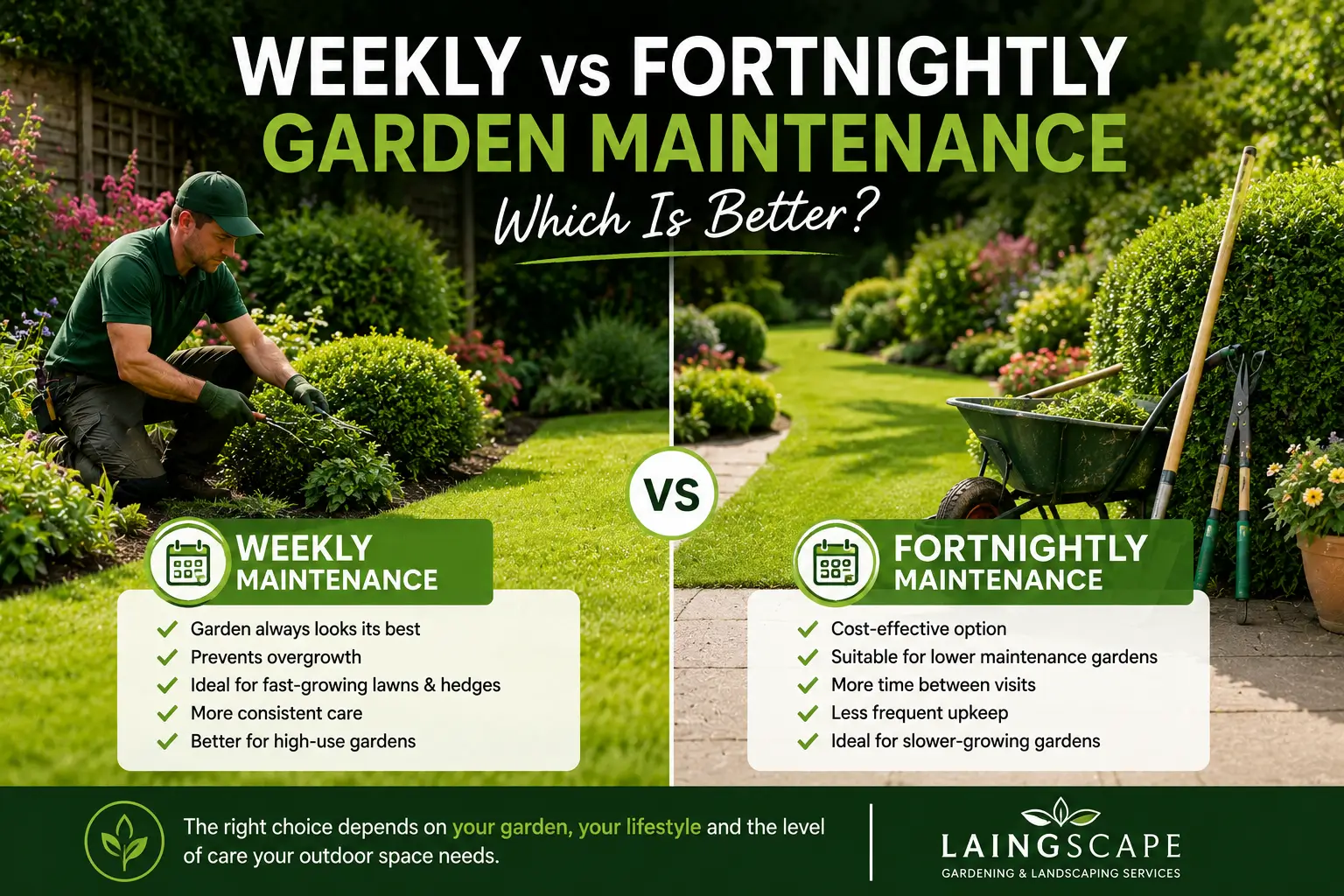
Weekly, Fortnightly or Seasonal Visits?
The right frequency depends on how quickly the garden grows and how you want it to look.
Weekly Visits
Suitable for gardens requiring consistently high presentation, particularly during periods of rapid growth.
Fortnightly Visits
A practical option for many established residential gardens where some growth between visits is acceptable.
Seasonal or Occasional Visits
Can work for lower-maintenance gardens or homeowners who manage basic tasks themselves.
The RHS also notes that mowing frequency should be adapted to grass growth, weather and the desired lawn style rather than following one rigid timetable.
For many Cornwall gardens, a flexible schedule that changes throughout the year can be more practical than maintaining exactly the same frequency in every season.
What Should You Expect From a Professional Gardener?
Beyond the physical gardening work, professionalism matters.
A reliable gardener should communicate clearly about what will be done, how often visits are expected and whether additional work is required.
You should also know what happens if the weather prevents a scheduled visit or if the garden needs more work than originally expected.
When choosing a gardening contractor, the RHS recommends checking experience, references, photographs, quotations and relevant qualifications or insurance where appropriate.
A professional relationship should be based on clear expectations rather than assumptions.
Professional Garden Maintenance in Cornwall
At Laingscape, we provide professional garden maintenance for homeowners and other properties across Cornwall.
With more than 20 years of hands-on gardening and landscaping experience, our work can include lawn care, weed control, hedge trimming and reduction, seasonal pruning, brushcutting, strimming, garden tidy-ups and overgrown garden clearance.
The exact work carried out during a visit depends on the condition of the garden and the maintenance plan agreed with the customer.
This practical approach means the focus stays on what your garden actually needs rather than carrying out unnecessary work simply to fill a visit.
Why Professional Garden Visits Can Be Worthwhile
For many homeowners, the biggest benefit is consistency.
Small maintenance tasks are easier to manage when they are dealt with regularly instead of being left until the garden becomes seriously overgrown.
Professional help can also save homeowners time and reduce the physical effort involved in repetitive or demanding outdoor work.
The RHS specifically recognises professional lawn maintenance as one option for homeowners looking to reduce the time and effort required to keep a garden in good condition.
For people who work long hours, manage holiday properties or simply want to spend their free time enjoying the garden rather than maintaining it, regular professional visits can be a practical solution.
What Should a Professional Gardener Do During a Garden Visit? A Practical Checklist
A well-organised visit could include some or all of the following:
- Assess the garden before starting
- Mow and edge the lawn where required
- Remove weeds
- Maintain borders
- Trim suitable hedges
- Prune appropriate shrubs
- Clear leaves and seasonal debris
- Strim difficult areas
- Check for visible garden problems
- Remove or manage agreed green waste
- Leave paths and working areas tidy
- Report issues requiring additional work
Not every task needs to be completed at every visit.
The best maintenance service prioritises the work that will make the greatest difference to the garden at that particular time.
Get Professional Garden Maintenance in Cornwall
If you’re wondering what should a professional gardener do during a garden visit, the answer should always begin with your garden’s individual requirements.
At Laingscape, we provide a friendly, practical garden maintenance service tailored to the property, season and agreed requirements.
Whether you need regular lawn care, hedge maintenance, seasonal pruning, weed control, garden tidy-ups or help bringing an overgrown garden back under control, we can discuss your needs and recommend a suitable approach.
With more than 20 years of experience, we understand that good garden maintenance is about consistency, attention to detail and knowing which jobs matter most.
Call Laingscape on 07988 759149 or email oliver@laingscape.co.uk to discuss your garden and request a free, no-obligation quotation. You can also explore our Contact page or relevant service pages to find out more about how we can help maintain and improve your outdoor space. You can also see examples of our work and customer experiences through our Google Business Profile and social media presence.
Frequently Asked Questions
What should a professional gardener do during a garden visit?
A professional gardener should assess the garden and complete the agreed maintenance tasks, which may include mowing, edging, weeding, pruning, hedge trimming, clearance and seasonal work.
How long should a professional garden visit take?
It depends on garden size, condition, access and the amount of work required. There is no standard visit length that suits every property.
How often should a professional gardener visit?
Many gardens benefit from weekly or fortnightly visits during the growing season, although the ideal frequency depends on growth, garden type and the homeowner’s expectations.
Should a gardener mow the lawn every visit?
Not necessarily. Mowing frequency should depend on grass growth, weather and the desired lawn style. Some visits may be better used for other essential maintenance tasks.
Does garden maintenance include hedge trimming?
It can, depending on the agreed service. Regular hedge trimming and reduction are common garden maintenance tasks, but larger or specialist work may require a different service.
Should garden waste be removed after maintenance?
This depends on the agreement with the gardening company. Waste collection and disposal should be clarified before work begins.
Can a professional gardener help with an overgrown garden?
Yes. Brushcutting, strimming, pruning, clearance and other initial work can help bring an overgrown garden back to a manageable condition before regular maintenance begins.
Can a gardener identify problems with my garden?
An experienced gardener may notice visible issues such as poor drainage, damaged fencing, unhealthy plants or excessive weed growth and can recommend when further investigation may be appropriate.
Is professional garden maintenance worth the cost?
For homeowners who lack time, equipment or confidence to manage regular garden work, professional maintenance can provide a practical way to keep the outdoor space healthy and presentable.
Does Laingscape provide garden maintenance across Cornwall?
Yes. Laingscape provides garden maintenance and landscaping services across areas including Truro, Newquay, Falmouth, St Austell, St Mawes and surrounding parts of Cornwall.
Conclusion
Understanding what should a professional gardener do during a garden visit helps you get more value from a maintenance service.
A good visit isn’t simply about mowing grass. It involves assessing the garden, prioritising seasonal work, maintaining lawns and borders, managing weeds and hedges, identifying potential problems and leaving the outdoor space tidy.
The right maintenance schedule should also change as your garden changes. Spring growth, summer mowing, autumn clearance and winter pruning can all require different approaches.
If you’re looking for reliable garden care in Cornwall, Laingscape can help you establish a practical maintenance routine based on your garden’s actual needs.
With professional experience, clear communication and a focus on quality workmanship, regular garden visits can keep your outdoor space healthier, tidier and easier to enjoy throughout the year.
In the end, the best answer to “what should a professional gardener do during a garden visit?” is simple: they should do the right work for the garden, at the right time, and leave it better than they found it.