Skip to content
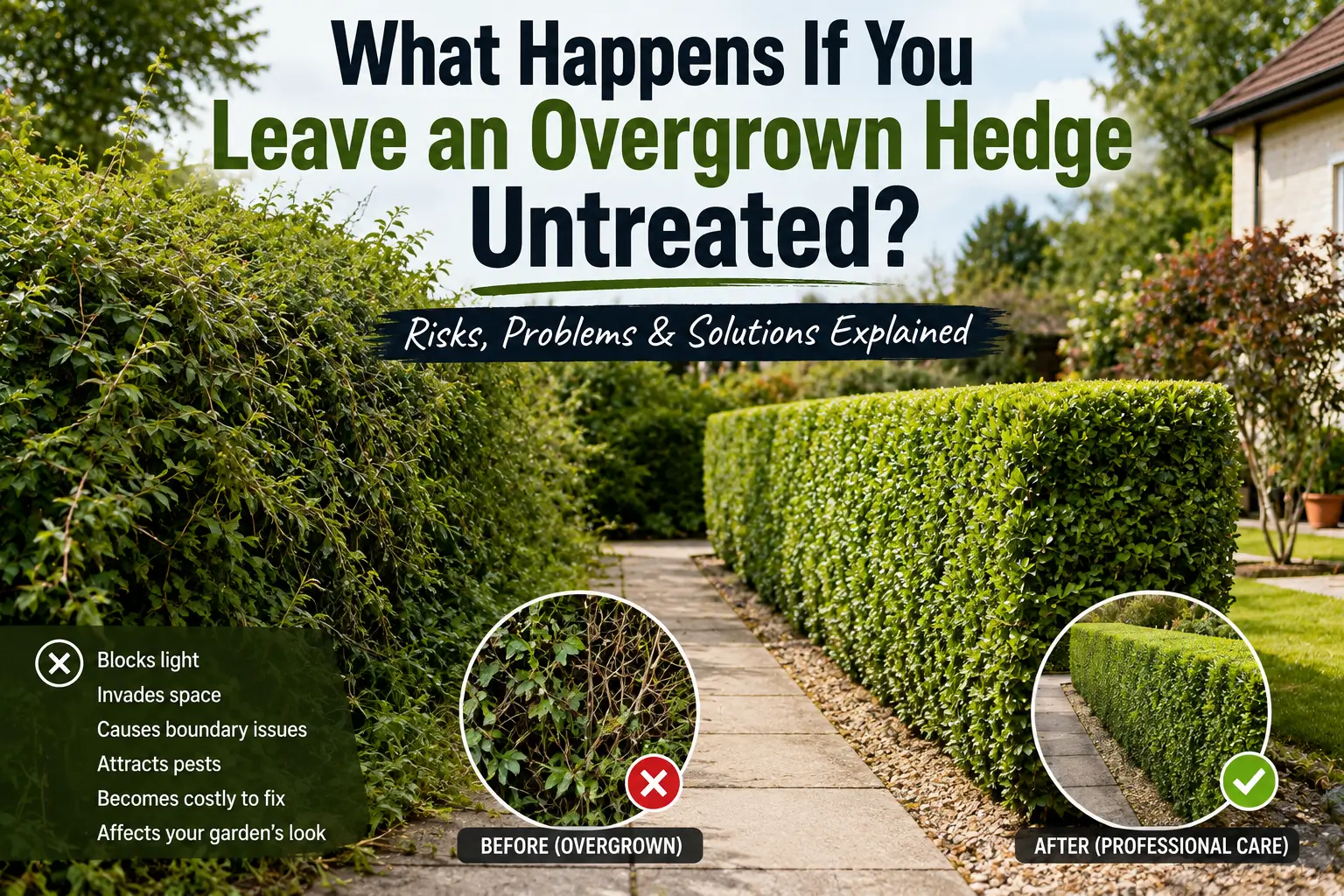
A healthy hedge can completely change the look and feel of a garden. It creates structure, improves privacy, softens boundaries and provides valuable shelter for birds and other wildlife. But when hedges become thin, woody, patchy or overgrown, they can quickly make an otherwise well-kept garden look untidy.
The good news is that most hedges respond well to the right combination of pruning, watering, feeding, weed control and general care.
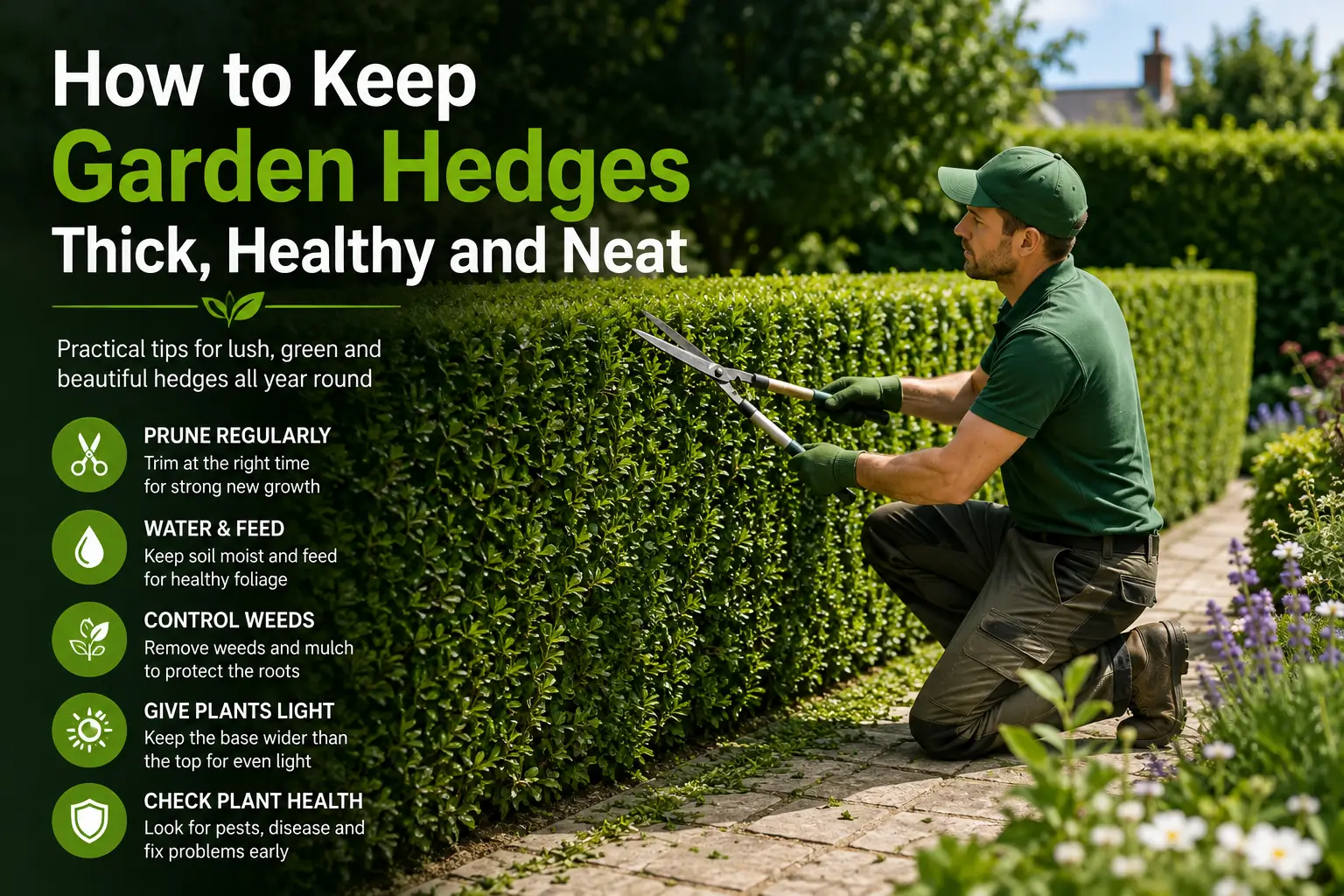
If you’ve been wondering how to keep garden hedges thick, healthy and neat, the key is consistency rather than simply cutting them as short as possible. Different hedge species have different growth habits, so timing and technique matter.
This guide explains the practical steps UK homeowners can take to encourage dense growth and maintain an attractive hedge throughout the year.
Start With the Right Hedge for the Location
A hedge can only perform well if the plant is suited to its growing conditions.
Before trying to improve a struggling hedge, consider:
- How much sunlight it receives
- Whether the soil drains well
- How exposed the garden is to wind
- How much space is available
- How much maintenance you want to do
- Whether you need privacy, security or decoration
The Royal Horticultural Society notes that there are hedging plants suitable for a wide range of conditions, but choosing a species suited to the specific site is important for long-term success.
For Cornwall gardens, exposure can be particularly important. A hedge in a sheltered suburban garden may grow very differently from one exposed to strong coastal winds.
Choosing the right plant is therefore the first step towards a thick and healthy boundary.
Prune Your Hedge at the Right Time
Regular pruning encourages many hedging plants to produce bushier growth.
However, timing matters. Cutting too aggressively or at the wrong time can weaken a plant, damage new growth or interfere with nesting wildlife.
The RHS explains that established hedges are generally maintained through regular trimming, while young hedges benefit from formative pruning to encourage bushy growth. Formal hedges may require trimming more frequently than informal ones.
The ideal timing depends on the species.
Before cutting, identify what type of hedge you have and check its recommended pruning period. This is especially important if you’re dealing with evergreen, deciduous or conifer hedging.
For mature hedges, regular light trimming is generally preferable to allowing excessive growth and then attempting to remove a large amount at once.
Keep the Base Wider Than the Top
One simple technique can make a significant difference to hedge density.
Try to maintain a slightly tapered shape, with the hedge wider at the bottom than at the top.
Why?
Because the upper growth can otherwise shade the lower branches. Over time, this may contribute to bare patches near the base.
The RHS recommends keeping the top narrower than the base so that more light can reach lower growth.
For a formal hedge, you can use canes and string as a guide when maintaining a straight line. Step back regularly while trimming rather than concentrating only on the section directly in front of you.
Small adjustments during each trim are much easier than correcting a badly uneven hedge later.
Don’t Cut Into Old Wood Without Checking the Species
One of the biggest mistakes homeowners make is assuming every hedge will regenerate after hard cutting.
Some plants respond well to renovation, but others do not produce new growth from old, bare wood.
This is particularly important with many conifer hedges. The RHS warns that some conifers do not reliably regrow when cut back hard into old wood.
If a hedge has become extremely tall, wide or bare, don’t immediately remove large sections.
First identify the plant and determine whether it can tolerate hard renovation. For valuable or mature hedges, professional advice can prevent an irreversible pruning mistake.
Give the Roots Enough Water and Nutrients
Healthy growth starts below ground.
If a hedge is struggling, don’t focus entirely on the leaves and branches. Check the soil around the roots as well.
Newly planted hedges need particular attention. The RHS recommends regular watering during the establishment period, especially during dry spells, with ongoing weed control around young plants.
Established hedges are usually more resilient, but prolonged dry conditions can still affect growth.
Helpful practices include:
- Watering during extended dry periods
- Keeping competing weeds under control
- Applying suitable organic mulch
- Improving poor soil where appropriate
- Avoiding unnecessary soil disturbance around roots
A healthy root system gives the plant a much better foundation for producing strong new growth.
Control Weeds Around the Hedge
Weeds compete with hedging plants for water, nutrients and growing space.
This can be particularly problematic for young hedges, where developing roots have not yet established fully.
Keep the soil around the base relatively clear and avoid allowing vigorous weeds to become established.
Mulching can help suppress weeds while also helping the soil retain moisture. The RHS recommends organic mulch as part of ongoing hedge care and notes that keeping the hedge area weed-free supports healthy establishment.
For an established hedge, regular maintenance is usually easier than allowing weeds to become deeply rooted and difficult to remove.
Look for Signs of an Unhealthy Hedge
Knowing what to look for makes it easier to deal with problems early.
Common warning signs include:
- Bare areas near the base
- Yellowing or discoloured foliage
- Dead branches
- Uneven growth
- Excessive leaf loss
- Very slow new growth
- Cracked or damaged stems
- Pest or disease symptoms
A few bare branches don’t necessarily mean the whole hedge is unhealthy. Some thinning can result naturally from age, shading or the plant’s growth habit.
However, sudden changes should be investigated.
If the same section repeatedly struggles while the rest of the hedge grows normally, there may be an underlying issue with soil, drainage, roots or exposure.
Protect Your Hedge From Excessive Competition
Hedges often have to compete with nearby plants, lawns and other garden features.
Large shrubs planted too close to a hedge can take moisture and nutrients from the same area. Grass growing right up against the base can also compete with young plants.
Where appropriate, maintain a clear area around the hedge and avoid planting aggressive species directly beside it.
This doesn’t mean the area needs to be completely bare. A carefully planned border can look attractive while still giving the hedge enough room to grow.
The objective is balance: healthy competition within the garden without allowing one plant to dominate another.
Think About Wildlife Before Trimming
A hedge is more than a decorative boundary.
It can provide shelter, nesting opportunities and food for wildlife. This is one reason pruning should be planned carefully rather than treated as a routine task with no regard for the season.
The RHS highlights the wildlife value of hedges and advises checking carefully for active bird nests before trimming.
If you discover an active nest, postpone cutting that section until the birds have finished using it.
For homeowners managing larger hedges, this is another reason to plan maintenance in advance rather than leaving everything until the hedge becomes heavily overgrown.
Seasonal Hedge Care in Cornwall
Hedge maintenance should change with the seasons.
Spring
Check for winter damage, remove dead material where appropriate and monitor new growth. Avoid disturbing active nests.
Summer
Growth can become vigorous, so monitor the hedge regularly. Water newly planted or vulnerable hedges during prolonged dry weather.
Autumn
Depending on the species and local conditions, autumn can be an important period for pruning and general preparation.
Winter
Some deciduous hedges can be managed during the dormant period, provided conditions and the species are suitable. Avoid working on waterlogged or frozen ground.
Because Cornwall has a relatively mild climate, growth patterns can vary from gardens elsewhere in the UK. Local exposure, soil and species all need to be considered.
When Professional Hedge Cutting Makes Sense
Some hedges are straightforward to maintain yourself, particularly if they’re small and accessible.
Professional help becomes more useful when the hedge is:
- Very tall
- Wide or heavily overgrown
- Difficult to access
- Close to buildings or boundaries
- Made up of mature woody growth
- Part of a large property
- Requiring regular scheduled maintenance
Professional hedge cutting isn’t simply about making the hedge shorter. The aim should be to maintain its shape, health and long-term appearance while removing growth appropriately.
For larger or complicated hedges, using an experienced contractor can also reduce the risk of damaging the plants or surrounding garden.
Professional Hedge Cutting and Garden Maintenance in Cornwall
Laingscape provide professional hedge cutting and garden maintenance across Cornwall, helping homeowners keep their outdoor spaces tidy, manageable and well cared for.
Our garden maintenance services include hedge trimming and reduction, seasonal pruning, weed control, lawn care, brushcutting, strimming and general garden tidy-ups.
With more than 20 years of hands-on experience, we understand that every garden has different requirements. Some properties need regular visits, while others benefit from seasonal or occasional maintenance.
If your hedge has become too large to manage yourself or you’re simply looking for a reliable ongoing maintenance service, our team can assess the work and provide straightforward advice.
Get Professional Help With Your Garden
If your hedge is becoming difficult to control, don’t wait until the problem becomes significantly harder to manage.
Laingscape can help with hedge trimming, reduction, weed control and wider garden maintenance across Truro, Newquay, Falmouth, St Austell, St Mawes and surrounding areas.
With a practical, personal approach and more than 20 years of experience, we focus on doing the work your garden actually needs.
You can also view customer feedback through our Google Business Profile and explore our wider services before deciding what is right for your property.
Call: +44 7988 759149
Email: oliver@laingscape.co.uk
Location: Four Winds, Zelah, Truro TR4 9JD, United Kingdom
Request a free, no-obligation quotation to discuss your hedge or garden maintenance requirements.
Conclusion
Understanding how to keep garden hedges thick, healthy and neat comes down to choosing the right plant, maintaining healthy soil, controlling weeds and pruning correctly.
Regular light maintenance is generally easier than allowing a hedge to become severely overgrown. At the same time, avoid assuming every hedge can tolerate hard cutting, particularly when dealing with conifers or mature plants.
For Cornwall gardens, local conditions such as wind exposure, rainfall, soil and planting location can also influence hedge performance.
With the right care and a sensible maintenance routine, a well-established hedge can remain an attractive, useful and wildlife-friendly feature for many years.
If you’re unsure how to keep garden hedges thick, healthy and neat, or your hedge has already become overgrown, professional hedge cutting and garden maintenance can provide a practical way forward.
Frequently Asked Questions
How often should garden hedges be trimmed?
It depends on the species and the style of hedge. Informal hedges may only need annual trimming, while formal hedges can require two or three cuts during the growing season.
Why is my hedge becoming thin at the bottom?
A hedge can become thin near the base when upper growth blocks light from reaching lower branches. Maintaining a slightly tapered shape can help light reach the lower sections.
Can an overgrown hedge become thick again?
Sometimes. The answer depends heavily on the plant species and how far it has been cut back. Some hedges tolerate renovation well, while certain conifers may not regrow from old wood.
Should I water an established hedge?
Established hedges generally require less additional watering than newly planted ones. However, watering can be beneficial during prolonged dry conditions, particularly for vulnerable plants.
Does mulch help garden hedges?
Yes. Organic mulch can help retain soil moisture, suppress weeds and improve soil conditions around hedging plants when applied appropriately.
What is the best hedge shape for dense growth?
A slightly tapered shape, with the base wider than the top, allows more light to reach lower branches and can help maintain fuller growth.
When should I avoid trimming my hedge?
Avoid disturbing active bird nests. Always check carefully before cutting, particularly during the nesting season. The RHS advises avoiding hedge trimming between March and August where possible, or checking thoroughly for active nests before work.
Which hedges need the most maintenance?
Formal hedges and faster-growing species generally require more frequent trimming than informal, slower-growing hedges. The exact requirement depends on the plant and the desired shape.
Can professional hedge cutting improve an overgrown garden?
Yes. Appropriate trimming and reduction can restore structure and improve the appearance of an overgrown garden. However, the correct approach depends on the hedge species, age and condition.
Does Laingscape provide hedge cutting in Cornwall?
Yes. Laingscape provides hedge trimming and reduction as part of its garden maintenance services across Cornwall, including Truro, Newquay, Falmouth, St Austell, St Mawes and surrounding areas.
Recommended Authority
For detailed, species-specific guidance on hedge pruning, planting and ongoing care, the Royal Horticultural Society is an excellent reference for UK gardeners.