Skip to content

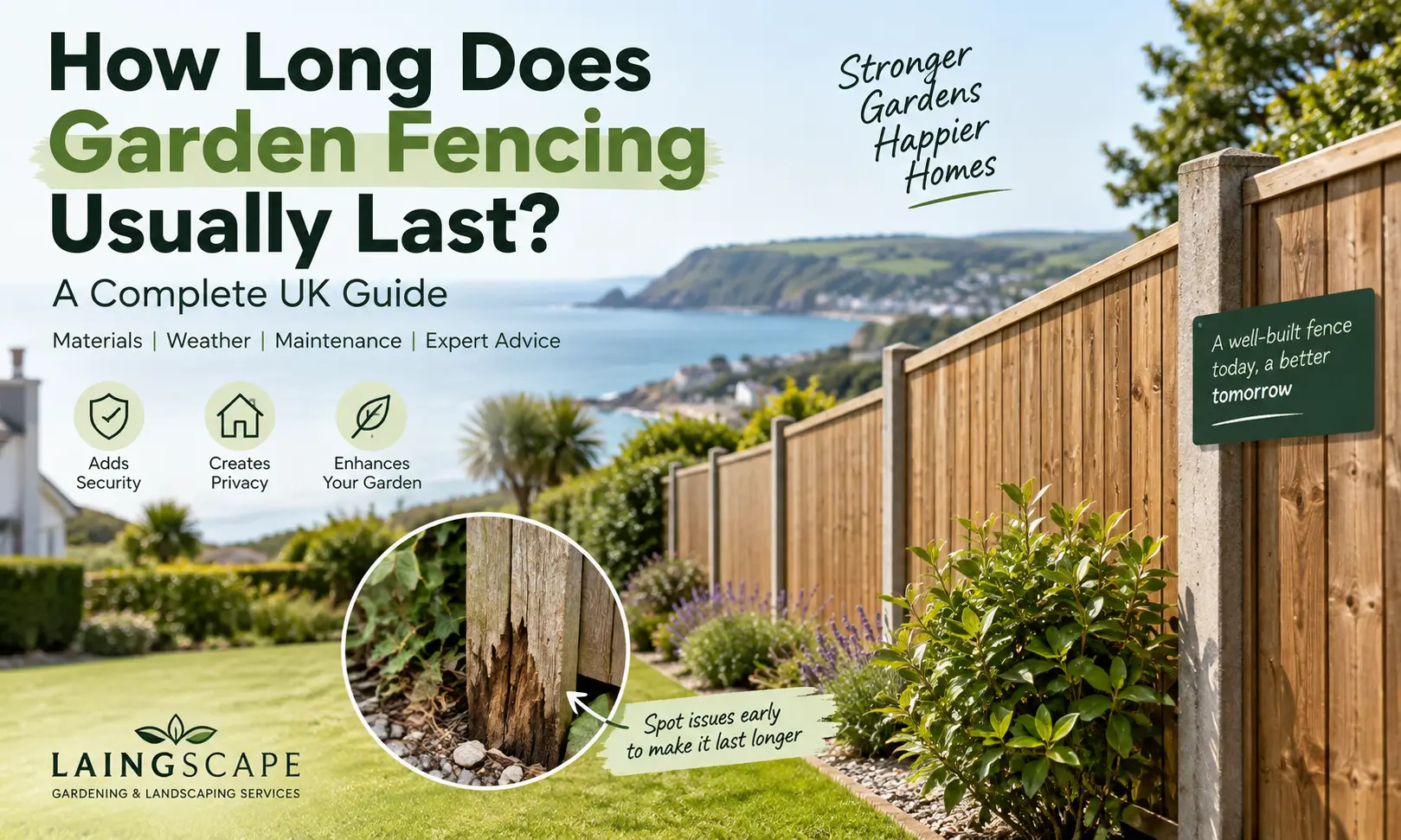
A garden fence is easy to overlook until a panel starts leaning, a post begins to rot or strong winds expose a weak section. At that point, homeowners naturally start asking: How Long Does Garden Fencing Usually Last?
There isn’t one fixed answer. A well-installed timber fence can provide many years of service, but its lifespan depends on the quality of the materials, installation, ground conditions, exposure to weather and how well it is maintained.
For homeowners in Cornwall, these factors can be particularly important. Wet weather, strong winds and coastal exposure can all place additional demands on garden boundaries.
Understanding what affects fence longevity can help you maintain your existing boundary, recognise early warning signs and know when replacement makes more sense than another repair.
So, How Long Does Garden Fencing Usually Last?
A typical timber garden fence can last around 10 to 15 years, although some fences may last longer with good materials, proper installation and regular care.
However, this should be treated as a general guide rather than a guarantee.
The lifespan can vary considerably depending on:
- Type and quality of timber
- Fence design and construction
- Quality of posts and fixings
- Ground drainage
- Exposure to wind and rain
- Installation quality
- Regular maintenance
For example, a fence in a sheltered garden with good drainage may remain serviceable for considerably longer than an exposed boundary where moisture remains around the posts.
The most important question isn’t simply the age of the fence. Its current condition matters more.
What Determines a Fence’s Lifespan?
Several factors work together to determine how long your garden fencing remains strong and attractive.
Timber Quality
The quality and treatment of the timber have a direct influence on durability. Outdoor fencing needs to cope with continual exposure to moisture and changing weather conditions.
Installation
Even good-quality fencing can fail prematurely if posts aren’t installed properly or panels aren’t adequately supported.
Ground Conditions
Persistent moisture around timber posts can accelerate deterioration, particularly where drainage is poor.
Weather Exposure
Strong winds place additional pressure on panels, posts and fixings. This is especially relevant for exposed properties and coastal locations.
Maintenance
Regular inspection helps identify small problems before they develop into expensive repairs.
Why Fence Posts Often Fail First
When homeowners wonder How Long Does Garden Fencing Usually Last?, they often focus on the visible panels.
In reality, the supporting posts deserve just as much attention.
Posts are in direct contact with the ground, making them particularly vulnerable to prolonged moisture. Once a post becomes weakened, the entire section of fencing can become unstable.
Common warning signs include:
- Posts becoming loose
- Visible movement
- Rot near ground level
- Leaning sections
- Cracking or splitting timber
- Panels no longer sitting correctly
A fence panel may still look reasonably good, but if its supporting post has deteriorated, the boundary may already need attention.
How Cornwall Weather Can Affect Garden Fencing
Cornwall’s weather can be challenging for outdoor timber structures.
Rain and moisture can contribute to timber deterioration, while strong winds can put additional strain on fence panels and posts.
Properties close to the coast may experience particularly exposed conditions. Salt-laden air, wind and damp conditions can all make appropriate materials, installation and maintenance important considerations.
This doesn’t mean a fence in Cornwall will automatically have a short lifespan.
Instead, it means homeowners should inspect fencing regularly and address problems before they become structural failures.
A small repair after a storm may be considerably simpler than replacing an entire boundary later.
Signs Your Fence May Need Repair
Not every damaged fence needs complete replacement.
If the main structure remains sound, individual components may be repairable.
Look for signs such as:
Loose Panels
A panel that has moved or become detached from its supports may only require refixing or replacement.
Damaged Posts
A single weakened post can sometimes be replaced without removing the entire fence.
Broken Sections
Localised storm damage doesn’t necessarily mean the whole boundary has reached the end of its useful life.
Loose Gates
A gate that no longer closes properly may need adjustment, new hinges or replacement components.
Getting problems assessed early can help you avoid allowing a small defect to affect neighbouring sections.
When Should You Replace Garden Fencing?
Sometimes repair simply isn’t the most sensible option.
If several posts are rotten, multiple panels are damaged and the fence is generally unstable, replacing individual sections repeatedly may offer poor value.
Replacement is worth considering when:
- Rot is widespread
- Several posts are unstable
- Panels are badly damaged
- The fence repeatedly fails during windy weather
- Repairs have become frequent
- The boundary no longer provides adequate privacy
- The overall structure is becoming unsafe
The age of the fence is useful information, but it shouldn’t be the only deciding factor.
A relatively old fence in good condition may continue to perform well, while a poorly installed younger fence may already need substantial work.
How to Extend the Life of Your Garden Fence
Good maintenance won’t make a fence last forever, but it can help you get more value from your investment.
Start by inspecting the boundary periodically, particularly after periods of strong wind or heavy rain.
Check for:
- Movement in posts
- Damaged panels
- Signs of timber deterioration
- Loose fixings
- Water collecting around posts
- Vegetation pressing against the fence
Keep plants and dense growth under control where they are placing continual pressure against panels.
It’s also sensible to deal with minor damage promptly. A loose panel left unattended can become more seriously damaged during the next period of bad weather.
Can Fence Treatment Make It Last Longer?
Protective treatments can help maintain timber fencing, but they aren’t a substitute for sound construction and installation.
The appropriate treatment depends on the timber, its existing condition and the manufacturer’s recommendations.
Before applying a product, check whether the timber has already been treated and follow the product instructions carefully.
Maintenance should also include looking beyond the visible surface. If water consistently remains around the base of posts, improving the underlying drainage may be more important than simply treating the timber.
Professional Fencing Installation Makes a Difference
When considering How Long Does Garden Fencing Usually Last?, installation quality should never be overlooked.
Correct positioning, secure posts, suitable fixings and appropriate preparation all contribute to a stronger boundary.
At Laingscape, we provide fencing as part of our wider gardening and landscaping services across Cornwall.
Our work can include new garden fencing, replacement sections and gates, with the installation planned around the property’s existing garden and requirements.
You can explore our Fencing Installation in Cornwall, Fencing in Newquay, Fencing in Truro and Fencing in Falmouth service pages for more information about our local services.
How Often Should You Inspect Your Fence?
You don’t need to carry out a complicated inspection.
A quick visual check every few months can help you identify obvious problems. It’s particularly worthwhile after severe weather.
Walk along the boundary and look for anything that has changed since your last inspection.
Pay particular attention to the base of posts, areas exposed to prevailing winds and sections close to trees or dense planting.
If something looks unstable, don’t wait until the next storm to deal with it.
Early action can sometimes turn a major replacement into a relatively straightforward repair.
Get Professional Fencing Help in Cornwall
If your garden boundary is leaning, damaged or showing signs of deterioration, Laingscape can assess the situation and help you decide whether repair or replacement is appropriate.
Our fencing services are designed around the individual property rather than using a one-size-fits-all approach.
With more than 20 years of gardening and landscaping experience, we can also consider how new fencing will work alongside lawns, patios, planting and other garden features.
You can also review customer feedback through Laingscape’s Google Business Profile and Trustpilot presence when researching the company.
If you’re considering Fencing Installation in Cornwall, contact us for a free, no-obligation quotation.
Phone: 07988 759149
Email: oliver@laingscape.co.uk
You can also explore our Services and Contact pages to learn more about the wider gardening and landscaping services we provide.
Customer Reviews and Local Reputation
When choosing a fencing contractor, reviews can provide useful insight into the customer experience.
Laingscape’s reputation is supported by customer feedback across platforms including Google Business Profile and Trustpilot. Rather than relying on star ratings alone, prospective customers can look at comments about communication, workmanship, reliability and the overall experience.
Our Google Business Profile is another useful place to see information about the business and customer feedback.
A good local reputation takes time to build, which is why consistent service and clear communication remain important parts of every project.
Conclusion
So, How Long Does Garden Fencing Usually Last? For many timber garden fences, around 10 to 15 years is a reasonable general expectation, but there is considerable variation.
The quality of the timber, installation, ground conditions, weather exposure and maintenance can all influence how long a fence remains useful.
For Cornwall properties, regular checks are particularly worthwhile because wind and wet weather can put additional pressure on outdoor boundaries.
Don’t wait for a fence to become seriously damaged before taking action. Inspect it regularly, repair small problems where practical and consider replacement when the underlying structure has deteriorated.
If you’re unsure whether your existing fence can be repaired or has reached the end of its useful life, professional advice can help you make a more informed decision.
Ultimately, How Long Does Garden Fencing Usually Last? depends not only on the fence itself, but on how well it is selected, installed, maintained and protected throughout its life.
Frequently Asked Questions
How long does a typical timber garden fence last?
A typical timber garden fence may last around 10 to 15 years, although lifespan varies according to timber quality, installation, ground conditions, weather exposure and maintenance.
Does rain shorten the life of garden fencing?
Persistent moisture can contribute to timber deterioration, particularly where water remains around posts or drainage is poor. Good installation and regular inspection can help manage the risk.
Why do garden fence posts rot?
Fence posts are exposed to moisture in the ground, which can contribute to timber deterioration over time. Poor drainage and prolonged wet conditions can increase the problem.
Should I repair or replace my garden fence?
If damage is limited to a few panels or posts, repair may be practical. Widespread rot, instability or repeated failures may make complete replacement more sensible.
How can I make my garden fence last longer?
Regular inspections, prompt repairs, appropriate timber care and keeping drainage around the boundary under control can all help extend the useful life of fencing.
Does coastal weather affect garden fencing?
Exposed coastal locations can subject fences to stronger winds and damp conditions. Choosing appropriate materials and ensuring professional installation can help the boundary cope with its environment.
How often should I check my garden fence?
A visual inspection every few months is sensible, with additional checks after periods of strong wind or heavy rain. Look particularly at posts, fixings and damaged panels.
Can one damaged fence panel be replaced?
Yes. If the supporting posts and surrounding structure remain sound, replacing an individual damaged panel may be possible.
When should I replace fence posts?
Consider replacement when posts become significantly loose, rotten, cracked or structurally unstable. The condition of the posts is often more important than the age of the panels.
Can Laingscape install replacement fencing in Cornwall?
Yes. Laingscape provides fencing installation and replacement services across areas including Newquay, Truro, Falmouth, St Austell, St Mawes and surrounding Mid Cornwall locations.