Skip to content

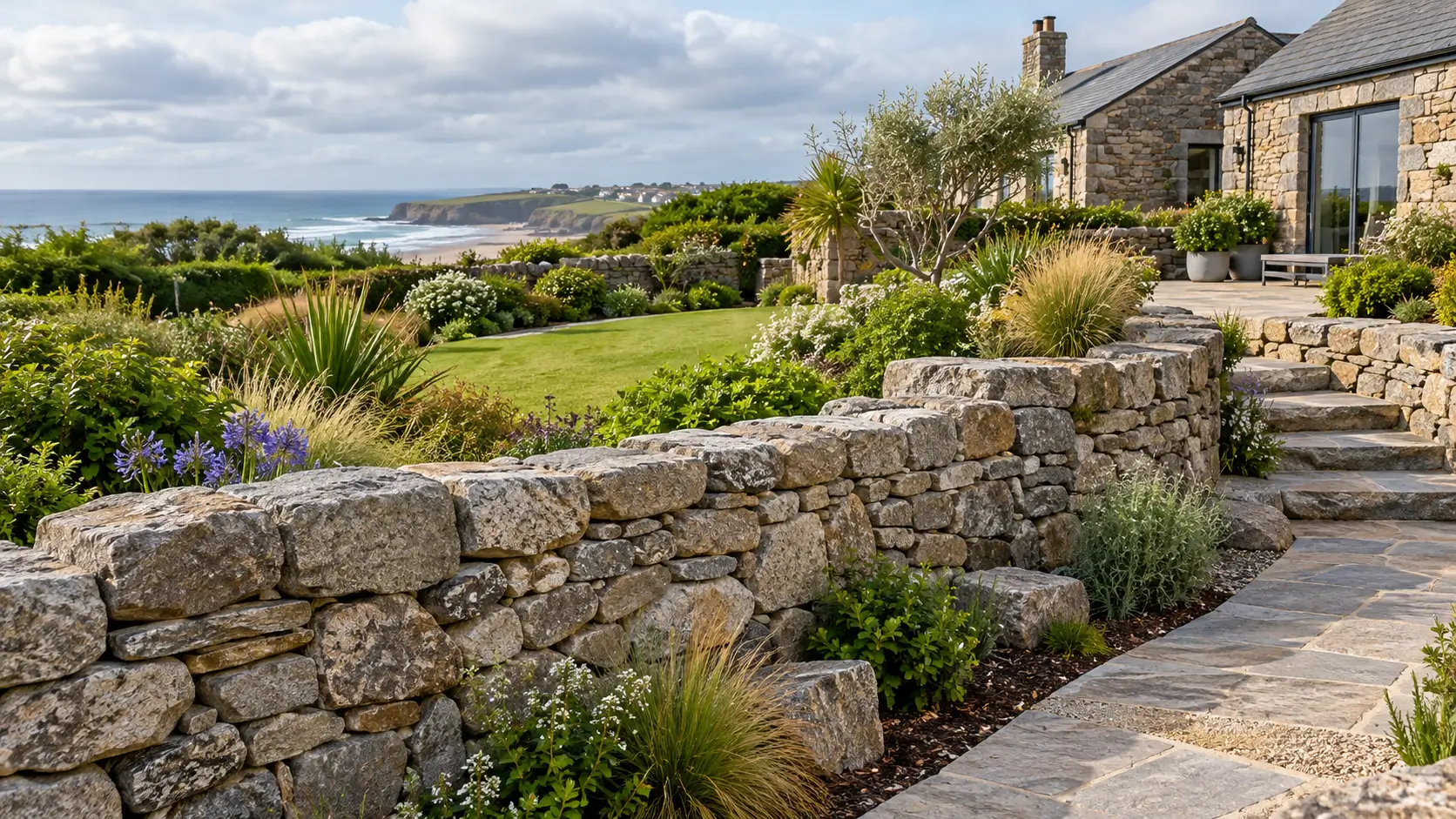
Cornish stone walls are a timeless feature of the local landscape, bringing natural character, durability and structure to gardens across Cornwall. Whether you want to define your garden boundaries, create attractive raised beds or introduce traditional stonework into a modern outdoor space, a carefully designed stone wall can make a lasting difference.
For homeowners in Newquay, natural stone offers a practical way to complement the surrounding Cornish landscape while creating a garden that feels both functional and visually appealing.
In this guide, we explore the benefits of Cornish stone walls, popular design ideas, suitable locations and important considerations when planning your garden landscaping project.
What Is a Cornish Stone Wall?
A Cornish stone wall is a wall constructed using natural stone selected to complement the traditional character of Cornwall. Depending on the design, it may feature dry-stone construction, traditional mortar joints or a more contemporary arrangement of natural stone.
These walls are often inspired by Cornwall’s historic field boundaries, rural properties and traditional garden landscapes. Their natural textures and earthy colours help them blend into their surroundings.
Modern garden designs can also incorporate Cornish stonework to create a connection between traditional materials and contemporary outdoor living.
The most suitable construction method depends on the intended use, wall height, ground conditions and overall design of the garden.
5 Benefits of Natural Stone Walls for Gardens in Newquay
1. A Timeless, Natural Appearance
Natural stone has a distinctive appearance that works well with both traditional Cornish properties and modern homes. Variations in colour, texture and shape give every wall its own character.
A well-planned stone wall can become a focal point in your garden while complementing existing patios, planting and pathways.
2. Long-Lasting Garden Structure
When properly designed and constructed, a natural stone wall can provide a durable feature that serves your garden for many years.
Suitable foundations, appropriate stone selection and effective drainage are particularly important for walls that retain soil or support changes in ground level.
3. Clearly Defined Garden Areas
Stone walls can help separate different parts of an outdoor space without relying on fencing or artificial-looking barriers.
For example, a low wall can define a seating area, frame a pathway or separate a lawn from a planted border.
4. Supports Sloping Gardens
Some gardens in and around Newquay have uneven ground or changes in elevation. A suitably engineered retaining wall can help create more usable outdoor space by managing changes in ground level.
Retaining walls require careful consideration of soil pressure, drainage and structural stability. Larger or more complex projects may need specialist engineering advice.
5. Complements Cornwall’s Landscape
Natural stone is a good choice for homeowners who want their landscaping to reflect the character of the local environment.
When selected to suit the property, stone walls can create a cohesive appearance alongside natural planting, gravel paths, patios and other landscape features.
Popular Cornish Stone Wall Ideas for Your Garden
The best wall design depends on the size of your garden, the style of your property and how you intend to use the space.
Traditional Boundary Walls
A traditional stone boundary wall can provide a clear division between your property and neighbouring areas while maintaining a natural appearance.
This option is particularly suitable for gardens where traditional materials and understated landscaping are preferred.
Decorative Garden Walls
Low decorative walls can introduce structure without making a garden feel enclosed. They work well around flower beds, lawn edges and outdoor seating areas.
Combining natural stone with carefully selected planting can soften the overall design and create a more established appearance.
Raised Garden Beds
Stone raised beds offer a practical way to organise planting and introduce different heights into a garden.
They can be used for ornamental plants, shrubs and suitable edible crops, depending on the location and growing conditions.
Retaining Walls for Sloping Ground
A retaining wall can help create level areas for planting, pathways or seating where the garden has a change in elevation.
The wall must be designed for the loads it will support, with appropriate foundations and drainage. Structural requirements should be assessed before construction begins.
Stone Walls Around Patios and Seating Areas
A natural stone wall can frame an outdoor living area and help define its boundaries. Depending on the layout, it may also provide integrated seating or a backdrop for planting.
The key is to choose proportions and materials that complement the patio and the wider garden design.
Choosing the Right Stone for Your Project
Selecting the right stone is an important part of planning Cornish wall construction.
Consider the following factors before choosing materials:
- Colour and texture: Select stone that complements your property, paving and surrounding landscape.
- Stone size and shape: These influence the wall’s appearance, construction method and stability.
- Local character: Materials that suit the surrounding Cornish landscape can create a more cohesive result.
- Wall purpose: Decorative walls, boundary walls and retaining walls may require different materials and construction approaches.
- Maintenance requirements: Ask how the chosen stone and jointing method are expected to perform over time.
A professional landscaping assessment can help determine which materials and construction methods are suitable for your particular garden.
What Should You Consider Before Building a Stone Wall in Newquay?
Before starting a wall construction project, it is worth reviewing several practical considerations.
Ground Conditions and Foundations
The condition of the ground affects the foundation requirements and the stability of the finished wall. A wall supporting soil generally requires more careful structural planning than a small decorative feature.
Drainage and Rainfall
Cornwall’s wet and exposed conditions make drainage an important consideration, particularly for retaining walls.
Water must be managed appropriately to help reduce pressure behind the wall and protect its long-term stability.
Exposure to Wind and Weather
The wall’s position and exposure should influence the design and construction approach. Coastal conditions, wind exposure and moisture can affect the performance of materials and detailing.
Planning and Property Boundaries
Check whether planning permission, building regulations or other restrictions apply to your proposed wall. Requirements can depend on its height, location, function, proximity to a highway and whether the property is listed or within a protected area.
You should also establish the legal boundary before building a wall along the edge of your property.
How Much Does Cornish Wall Construction Cost?
The cost of building a natural stone wall in Newquay varies according to the scope and complexity of the project.
Factors that may affect the overall price include:
- The length and height of the wall.
- The type, quantity and availability of stone.
- Whether the wall is decorative, a boundary wall or a retaining structure.
- Ground preparation, excavation and foundation requirements.
- Site access and the amount of labour involved.
- Drainage, structural design and waste removal.
- Any additional landscaping required around the finished wall.
A straightforward low garden wall will generally have different requirements from a substantial retaining wall on sloping ground.
The most reliable way to understand the cost is to arrange a site assessment and request a quotation based on your garden, preferred materials and intended use.
Why Choose Professional Stone Wall Construction?
Although natural stone creates an attractive finish, achieving a stable and well-proportioned wall requires careful planning and workmanship.
Professional construction helps ensure that the wall’s foundations, stone placement, drainage and finishing details are appropriate for its purpose.
It can also help integrate the wall into the wider landscape, including patios, pathways, planting areas and changes in ground level.
For homeowners planning a landscaping project, it is worth considering the wall as part of the overall garden design rather than treating it as an isolated feature.
Planning Your Cornish Wall Construction Project in Newquay
Whether you are improving a traditional garden or creating a more structured contemporary outdoor space, natural stone can provide a practical and attractive landscaping solution.
Start by identifying the purpose of the wall, assessing the ground conditions and choosing a design that complements your property. From there, suitable materials and construction methods can be selected to meet the project’s requirements.
If you are considering a new stone wall for your property, explore our Cornish Wall Construction in Newquay service to learn more about creating a natural stone feature tailored to your outdoor space.
Ready to discuss your garden project?
Contact Laingscape to request a free quote and discuss your stone wall construction requirements in Newquay. 07988 759149 | oliver@laingscape.co.uk
Frequently Asked Questions about Cornish Stone Wall
How long does a Cornish stone wall last?
A properly designed and constructed stone wall can last for many years. Its lifespan depends on the stone, construction method, foundations, drainage, exposure and ongoing maintenance.
Are natural stone walls suitable for modern gardens?
Yes. Natural stone works well in both traditional and contemporary gardens. Clean lines, carefully selected stone and simple planting can create a modern finish while retaining the material’s natural character.
Can a stone wall be built on a sloping garden?
Yes, but the design must account for the slope, soil conditions and intended use. Where the wall retains soil, structural stability and drainage are especially important.
Do stone walls require much maintenance?
Maintenance requirements are generally manageable, but periodic inspections are advisable. Look for loose stones, damaged joints, signs of movement and drainage problems, particularly after severe weather.
Do I need planning permission for a garden wall in Newquay?
It depends on the wall’s height, location, purpose and the property’s planning restrictions. Check the applicable requirements with Cornwall Council before construction, especially for walls near highways, listed properties or protected areas.
How can I get a quote for Cornish wall construction?
Contact Laingscape with details of your property, the approximate wall dimensions and your preferred design. A site assessment can help establish the appropriate construction method and project cost.