Skip to content
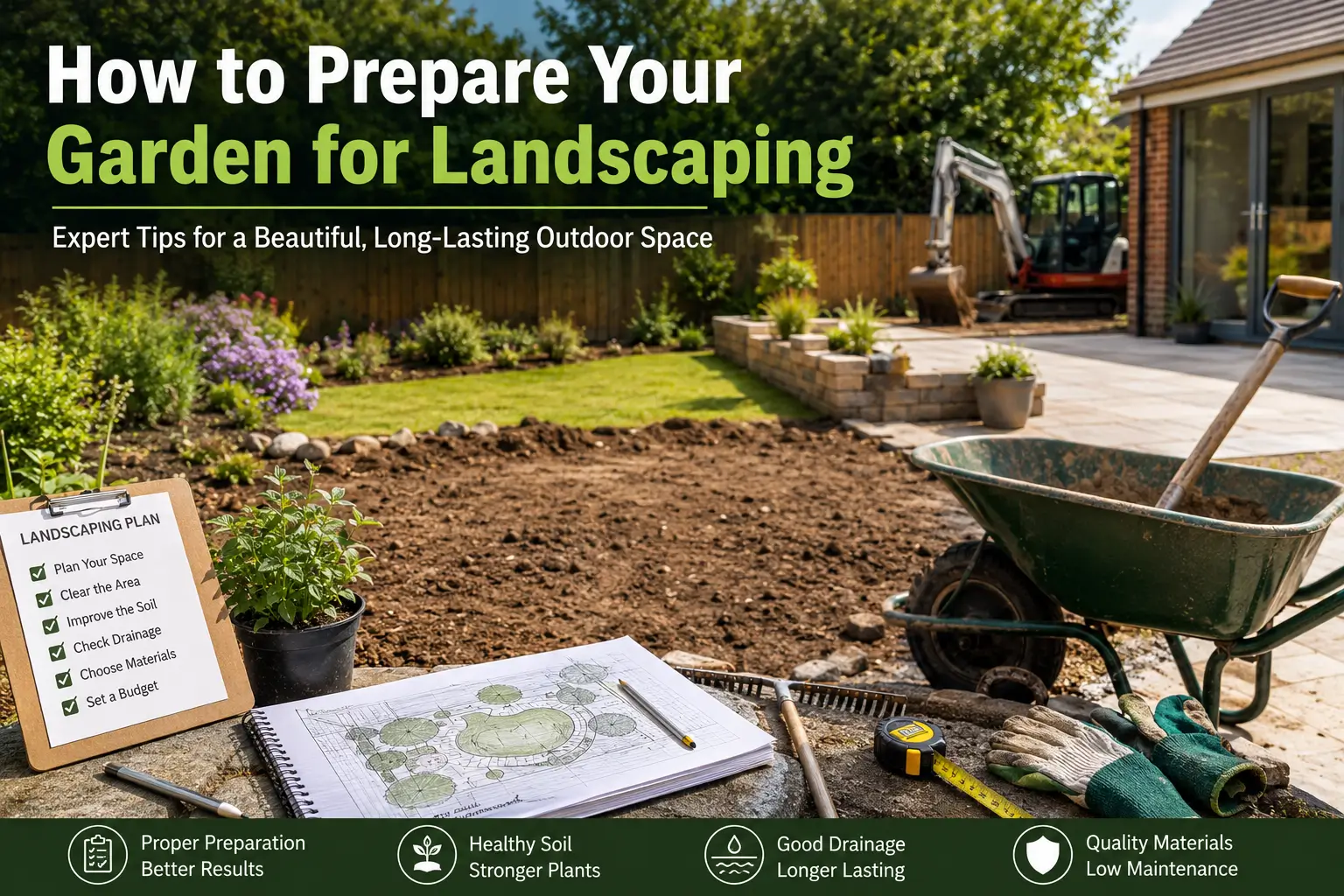
Transforming your outdoor space starts long before the first paving slab is laid or the first plant goes into the ground. Whether you’re planning a complete garden makeover or making a few practical improvements, proper preparation is the foundation of every successful landscaping project.
Knowing How to Prepare Your Garden for Landscaping can help you avoid costly mistakes, improve the longevity of your investment, and ensure the finished garden looks exactly as you imagined. From clearing the site and assessing drainage to understanding your soil and setting a realistic budget, every step plays an important role.
At Laingscape, we’ve spent more than 20 years helping homeowners across Cornwall create beautiful, practical gardens. Through years of hands-on experience, we’ve seen how careful planning always leads to better results. In this guide, we’ll explain everything you need to know before landscaping work begins.
Why Garden Preparation Matters
Many homeowners focus on choosing patios, plants or fencing, but preparation is often the most important stage of any landscaping project.
A properly prepared garden offers several benefits:
- Better drainage and healthier soil
- Stronger foundations for patios and pathways
- Improved plant growth
- Reduced maintenance in the future
- More accurate project costs
- A longer-lasting finished garden
Skipping preparation can lead to uneven paving, poor drainage, unhealthy planting areas and unnecessary repair costs later.
Spending time preparing your garden properly helps every part of the project run more smoothly.
Start with a Clear Landscaping Plan
Before any physical work begins, take time to decide what you want from your new garden.
Ask yourself questions such as:
- How will you use the space?
- Do you need entertaining areas?
- Will children or pets use the garden?
- Are you looking for a low-maintenance design?
- Would additional privacy improve the space?
Sketching a simple layout can help visualise where different features will sit.
Think about including:
- Patios
- Lawns
- Raised beds
- Seating areas
- Paths
- Fencing
- Outdoor lighting
- Planting borders
A well-planned layout prevents costly alterations once work has started.
Assess the Existing Garden
One of the most overlooked steps in How to Prepare Your Garden for Landscaping is understanding what already exists.
Walk around your garden and make notes about:
Soil Condition
Different soil types require different approaches.
Heavy clay soil may need improved drainage, while sandy soil often benefits from additional organic matter to retain moisture.
Sunlight
Observe which areas receive full sun, partial shade or full shade throughout the day.
This will influence plant selection and seating locations.
Drainage
After rainfall, look for standing water or areas that remain wet.
Poor drainage should always be addressed before installing patios, turf or planting beds.
Existing Features
Identify anything worth keeping, including:
- Mature trees
- Healthy shrubs
- Stone walls
- Established borders
- Decorative features
Retaining quality features can reduce costs while adding character to the finished landscape.
Clear the Garden Before Work Begins
Preparation often starts with removing anything that no longer serves a purpose.
Depending on the project, this may include:
- Weeds
- Dead plants
- Old fencing
- Broken paving
- Garden waste
- Overgrown shrubs
- Tree stumps
- Unused structures
Professional Garden Clearance not only creates a clean workspace but also reveals potential issues that may otherwise remain hidden beneath overgrown vegetation.
If your garden has become difficult to manage over time, clearing it first provides a fresh starting point for your landscaping plans.
Improve the Soil Before Landscaping
Healthy gardens begin below ground.
Once the site has been cleared, it’s important to improve the condition of the soil before introducing new planting or laying turf.
Simple improvements include:
- Removing stones and debris
- Adding compost or organic matter
- Breaking up compacted soil
- Levelling uneven ground
- Testing soil drainage
Good soil preparation encourages stronger root development and healthier plants for years to come.
For larger projects, professional landscapers may also adjust soil levels to improve water flow and prepare the site for hard landscaping features.
Think About Drainage Early
Cornwall’s weather can be unpredictable, making drainage one of the most important parts of any landscaping project.
Without proper drainage, you may experience:
- Waterlogged lawns
- Moss growth
- Slippery patios
- Flooding around buildings
- Soil erosion
The UK Government provides guidance on sustainable drainage systems (SuDS), particularly for larger hard landscaping projects where surface water management is important.
Professional landscaping should always consider water movement before construction begins.
Addressing drainage now is far easier than repairing problems after the project has been completed.
Set a Realistic Budget
One of the biggest advantages of planning early is having a clear understanding of costs.
Your landscaping budget should include:
- Site preparation
- Materials
- Labour
- Waste removal
- Planting
- Lighting
- Irrigation (if required)
- Contingency for unexpected work
Remember that investing in proper preparation often saves money in the long term by reducing future repairs and maintenance.
Rather than choosing the cheapest option, focus on value, quality workmanship and durable materials that will stand the test of time.
Decide Which Features Will Add the Most Value
Every garden is different, but some improvements consistently provide both practical and visual benefits.
Popular landscaping features include:
- Natural stone patios
- Porcelain paving
- Timber or composite decking
- Raised planting beds
- Decorative gravel
- New lawns
- Timber fencing
- Outdoor lighting
- Wildlife-friendly planting
The right combination depends on your property’s style, available space and how you intend to use your garden.
A professional landscaping consultation can help prioritise improvements that deliver the greatest long-term value while staying within budget.
Choose the Right Landscaping Materials
Once your garden has been prepared, the next step is selecting materials that suit both your property and Cornwall’s climate.
While appearance is important, durability and maintenance should also influence your decision.
Popular options include:
- Natural sandstone patios
- Porcelain paving
- Block paving
- Decorative gravel
- Composite or timber decking
- Premium turf
- Timber fencing
- Raised sleepers
For example, porcelain paving is an excellent low-maintenance choice for contemporary gardens, while natural sandstone creates a timeless look that complements many traditional Cornwall homes.
Choosing quality materials from the beginning can significantly reduce future maintenance costs and improve the lifespan of your landscaping project.
Consider Year-Round Garden Maintenance
Landscaping doesn’t end once the project is complete.
A beautiful garden continues to thrive with regular care.
Planning ongoing maintenance before construction helps protect your investment and keeps your outdoor space looking its best throughout the seasons.
Regular maintenance typically includes:
- Lawn mowing
- Hedge trimming
- Seasonal pruning
- Weed control
- Leaf clearance
- Border maintenance
- Patio cleaning
If your goal is a low-maintenance garden, discuss this with your landscaper during the planning stage. Small design decisions—such as selecting hardy planting, installing quality edging, or choosing low-maintenance paving—can make a significant difference over time.
Common Mistakes to Avoid Before Landscaping
Understanding How to Prepare Your Garden for Landscaping also means knowing what not to do.
Many landscaping problems begin before construction starts.
Avoid these common mistakes:
- Starting work without a clear design.
- Ignoring drainage issues.
- Choosing materials based only on price.
- Forgetting future maintenance requirements.
- Planting without considering mature sizes.
- Overlooking access for machinery.
- Skipping professional advice for larger projects.
- Setting an unrealistic budget.
Taking time to prepare properly helps prevent unnecessary delays, additional costs and disappointing results.
Why Professional Planning Makes a Difference
Some smaller garden improvements can be completed as DIY projects, but larger landscaping work often benefits from professional experience.
Professional landscapers understand:
- Ground preparation
- Drainage solutions
- Material selection
- Construction methods
- Planting schemes
- Local weather conditions
- Long-term maintenance
At Laingscape, every project begins with understanding how you want to use your outdoor space. Whether you’re planning a complete transformation or upgrading a single area, we create practical, attractive gardens designed to suit your property and lifestyle.
If you’re planning a larger project, you may also find planning guidance from the UK Government helpful for understanding drainage and permitted development where applicable.
Landscaping in Cornwall: Local Factors to Consider
Every region presents different landscaping challenges, and Cornwall is no exception.
The county’s mild coastal climate encourages healthy plant growth, but it also brings increased rainfall, strong winds in exposed locations and varying soil conditions.
When preparing your garden, consider:
- Coastal salt exposure near the shoreline.
- Wind protection for planting.
- Proper drainage for heavy rainfall.
- Suitable paving materials for damp conditions.
- Native or climate-friendly planting where appropriate.
Designing with Cornwall’s environment in mind creates a garden that looks attractive throughout the year while requiring less maintenance in the long term.
Why Homeowners Across Cornwall Choose Laingscape
Preparing a garden for landscaping is about much more than clearing a few weeds. It requires planning, experience and an understanding of how every stage affects the finished result.
With over 20 years of experience, Laingscape has helped homeowners throughout Mid Cornwall create outdoor spaces that are practical, attractive and built to last.
Our services include:
- Landscaping Cornwall
- Residential Landscaping
- Garden Renovation
- Garden Clearance
- Turf Laying
- Garden Maintenance
- Patios and paving
- Fencing and outdoor improvements
Many of our customers choose us because of our reputation for reliable workmanship, attention to detail and friendly service. Our independent Trustpilot reviews and Google Business Profile reflect the positive experiences of homeowners across Cornwall who have trusted us with their gardens.
Ready to Transform Your Garden?
If you’re planning a new landscaping project, the right preparation can save time, reduce costs and deliver better long-term results.
Whether you’re starting with an overgrown garden or have a clear vision for your outdoor space, our experienced team is here to help.
We offer free, no-obligation quotations and practical advice tailored to your property and budget.
Explore our Landscaping Cornwall, Residential Landscaping, Garden Renovation, and Garden Clearance services to learn more about how we can help bring your ideas to life.
Alternatively, contact us today to arrange a site visit and discuss your project with one of our experienced landscapers.
Laingscape
Four Winds, Zelah, Truro TR4 9JD, United Kingdom
Phone: +44 7988 759149
Email: oliver@laingscape.co.uk
You can also follow our latest projects and customer updates on Facebook or browse our Google Business Profile to see examples of our recent work and customer feedback.
Conclusion
Understanding How to Prepare Your Garden for Landscaping is the first step towards creating an outdoor space that is both beautiful and functional. By taking the time to plan your layout, assess your garden, improve the soil, address drainage and choose quality materials, you’ll create the perfect foundation for a successful landscaping project.
Whether you’re installing a new patio, replacing a lawn or planning a complete garden renovation, preparation is what separates an average result from one that lasts for years.
If you’d like professional guidance, Laingscape is here to help. With decades of experience and a reputation for quality workmanship across Cornwall, we can help turn your ideas into an outdoor space you’ll enjoy in every season.
Frequently Asked Questions
What is the first step when preparing a garden for landscaping?
The first step is assessing your existing garden. Measure the space, identify drainage issues, evaluate soil quality and decide how you want to use the finished garden.
Should I clear my garden before hiring a landscaper?
Not necessarily. Professional garden clearance is often included as part of a landscaping project and ensures waste is removed safely and efficiently.
How do I improve soil before landscaping?
Remove weeds and debris, loosen compacted soil and incorporate compost or organic matter to improve structure and drainage.
Why is drainage important before landscaping?
Poor drainage can lead to waterlogged lawns, damaged paving and unhealthy plants. Addressing drainage before construction helps prevent expensive repairs later.
When is the best time to start a landscaping project in the UK?
Autumn and spring are generally excellent times for landscaping, although many projects can be completed throughout the year depending on weather conditions.
How much should I budget for landscaping?
Costs vary depending on the size of your garden, materials and the complexity of the design. Requesting a professional quotation provides the most accurate estimate.
Can I prepare my garden myself?
Simple tasks such as removing weeds or clearing garden waste can often be completed yourself. However, larger projects involving drainage, excavation or structural work usually benefit from professional expertise.
How long does garden preparation usually take?
Smaller gardens may take a day or two, while larger or overgrown sites can require several days depending on the amount of clearance and ground preparation needed.
Do I need planning permission for landscaping?
Most domestic landscaping projects do not require planning permission, although certain walls, raised structures or drainage changes may be subject to local regulations. Check the UK Government Planning Portal if you’re unsure.
Why choose Laingscape for landscaping in Cornwall?
Laingscape brings over 20 years of experience, local knowledge and a commitment to quality workmanship. From initial preparation through to completed landscaping, we deliver tailored solutions that enhance outdoor spaces across Cornwall.