Skip to content
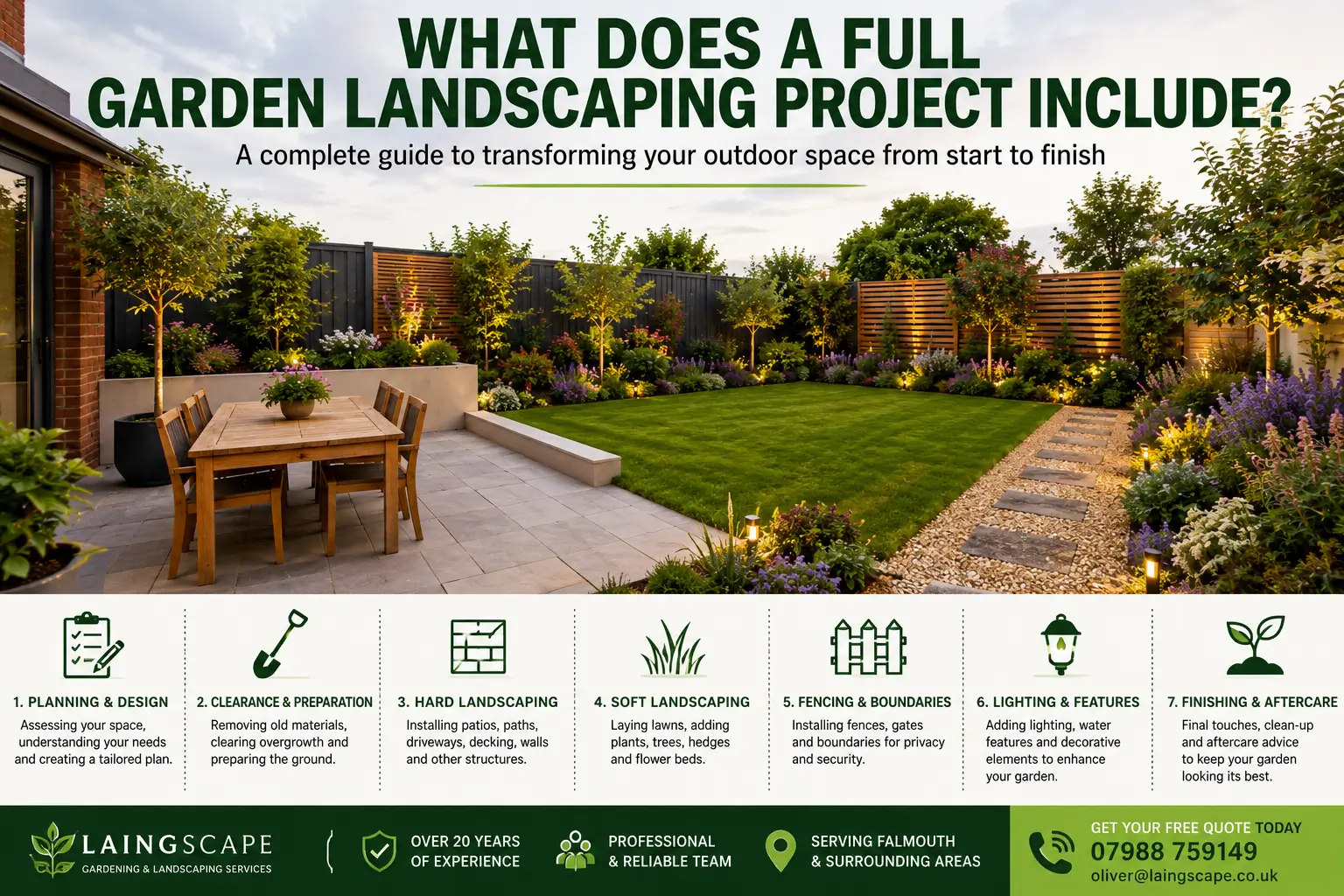
A garden transformation can be much more than replacing an old lawn or adding a new patio. A properly planned landscaping project brings different elements together to create an outdoor space that looks good, works well and suits the way you use your home.
But what does a full garden landscaping project include?
For many homeowners, the answer isn’t immediately obvious. A complete project can involve everything from clearing an overgrown garden and improving drainage to installing fencing, patios, lawns, planting areas and other features.
The exact work depends on the property, budget and desired result. However, understanding the typical stages makes it much easier to plan your project and choose the right landscaping company.
What Is a Full Garden Landscaping Project?
A full landscaping project involves improving several parts of an outdoor space rather than carrying out one isolated job.
It can combine hard landscaping, such as patios, paths, fencing and walls, with soft landscaping, including lawns, plants, shrubs and borders.
The aim is to create a garden where the different elements work together.
For example, a tired garden might be transformed by removing an old lawn, improving the ground, installing a patio, adding new fencing, laying fresh turf and introducing planting areas.
The final design should reflect how the homeowner wants to use the space.
1. Initial Consultation and Garden Assessment
Every successful project should start by understanding the garden and the homeowner’s requirements.
A professional landscaper will normally consider:
- Garden size and shape
- Existing features
- Access for materials and equipment
- Ground conditions
- Drainage
- Sunlight and shade
- Privacy requirements
- Intended use
- Budget
This stage is important because practical problems are easier to identify before construction begins.
The Royal Horticultural Society recommends creating a detailed plan and considering existing features, garden dimensions, sunlight and layout before starting major garden work.
2. Garden Clearance and Preparation
Before new landscaping can begin, the existing garden may need to be cleared.
This could include removing:
- Overgrown vegetation
- Unwanted shrubs
- Old turf
- Broken garden features
- Debris
- Unwanted fencing
- Excessive weeds
However, clearance shouldn’t automatically mean removing everything.
Some established plants, trees or features may be worth retaining. A good landscaping plan considers what can be reused as well as what needs to go.
Once the garden is cleared, the ground can be prepared for the next stage of the project.
3. Ground Preparation and Drainage
Ground preparation is one of the less visible parts of landscaping, but it can have a major influence on the finished result.
Depending on the garden, preparation may involve excavation, levelling, soil improvement, grading or dealing with drainage issues.
This is particularly important where patios, lawns or other surfaces are being installed.
Poor preparation can contribute to uneven surfaces, standing water or problems with new planting and turf.
Drainage should therefore be considered before hard landscaping is installed. The RHS also highlights the importance of managing water and considering drainage when planning garden surfaces.
4. Patios and Paved Areas
A patio is often one of the main features of a landscaped garden.
It can provide a dedicated area for:
- Outdoor dining
- Garden furniture
- Entertaining guests
- Relaxing
- Barbecues
- Connecting the house with the garden
The choice of paving should suit the property and how the area will be used.
Depending on the project, homeowners might consider natural stone, porcelain, concrete or other paving options.
The size and position also matter. A patio that is too small may feel impractical, while one that dominates a small garden can reduce planting and lawn space.
Good design balances hard surfaces with usable green space.
5. New Lawns and Turf Installation
For many garden makeovers, installing a new lawn creates the biggest visual change.
A tired or patchy lawn can make an otherwise attractive garden look unfinished. New turf provides an immediate, clean surface while giving the garden a fresh foundation.
A turf installation project may involve:
- Removing existing grass
- Preparing the soil
- Levelling the ground
- Improving soil where required
- Laying new turf
- Watering and providing aftercare guidance
The type of turf should also match the garden’s intended use. A family lawn, ornamental area and low-use garden may have different requirements.
This is where professional advice can prevent homeowners from choosing turf based purely on appearance.
6. Fencing, Gates and Garden Boundaries
Fencing can provide privacy, security and structure while helping define different areas of a garden.
As part of a complete landscaping project, fencing can be designed to work with the patio, lawn and planting rather than being treated as a separate feature.
Depending on the property, a project may include:
- New boundary fencing
- Replacement panels
- Timber posts
- Garden gates
- Decorative fencing
- Privacy screening
The RHS notes that fencing, hard landscaping and planting should be considered together when planning a garden, particularly where privacy and shelter are required.
For properties exposed to wind, the position and construction of boundaries also deserve careful consideration.
7. Planting, Borders and Soft Landscaping
Hard landscaping creates the structure of a garden, but planting gives it character.
Soft landscaping can include:
- Flower borders
- Shrubs
- Trees
- Groundcover plants
- Hedges
- Decorative planting
- Lawn areas
Plant selection should consider the garden’s conditions rather than simply choosing plants because they look attractive.
Sunlight, soil, moisture, exposure and available space can all affect how well plants establish.
For Cornwall properties, local conditions may also influence planting choices, particularly in exposed or coastal locations.
The RHS recommends choosing plants according to the site’s conditions, including soil, shade, wetness and coastal exposure.
8. Paths, Steps and Garden Access
A full garden makeover may also include paths or steps to make the outdoor space easier to navigate.
A well-positioned path can connect the house with a patio, lawn, shed, gate or other part of the garden.
Steps may be required where there are changes in ground level.
These features should be considered alongside drainage and the overall layout. A path isn’t simply a route from one point to another; it can influence how the garden feels and how people naturally move through the space.
For smaller gardens, careful positioning can also make the space feel more organised.
9. Decorative and Functional Garden Features
Depending on the project, additional features can add character or make the garden more useful.
These might include:
- Pergolas
- Decking
- Raised beds
- Decorative gravel
- Garden seating areas
- Cornish or dry-stone walls
- Feature planting
- Screening
Not every garden needs all of these features.
The strongest designs usually focus on the homeowner’s priorities rather than adding elements simply because they are available.
A practical garden might need better seating and storage, while another property may benefit more from planting and privacy.
10. Finishing, Tidying and Aftercare
Once the main installation work is complete, the garden should be checked and finished properly.
This can include clearing construction debris, checking surfaces, tidying planting areas and ensuring new turf or plants receive appropriate aftercare guidance.
Aftercare is especially important for newly installed lawns and planting.
A new garden is not completely finished when the tools leave the property. Plants need time to establish, turf needs appropriate watering and hard landscaping may require routine cleaning and maintenance.
This is also a good point to discuss an ongoing garden maintenance plan.
How Long Does a Full Landscaping Project Take?
There isn’t a universal timescale.
A small garden makeover may take only a few days, while a larger project involving extensive excavation, paving, fencing, turf and planting can take considerably longer.
Factors include:
- Garden size
- Amount of clearance
- Ground conditions
- Number of features
- Material availability
- Access
- Weather
- Complexity of the design
It’s better to agree on a realistic schedule after the garden has been assessed rather than relying on a generic timeframe.
For larger projects, the RHS recommends getting clear estimates for the different elements of the work and establishing exactly what is included.
How Much Does Full Garden Landscaping Cost?
The cost varies significantly from one garden to another.
A small project involving new turf and simple planting will naturally cost less than a complete transformation involving extensive groundwork, paving, fencing and drainage.
Your budget may be influenced by:
- Garden size
- Materials selected
- Ground preparation
- Waste removal
- Paving requirements
- Fencing
- Turf
- Planting
- Labour
- Access
Rather than choosing a landscaping company based only on the cheapest quote, compare what each quotation actually includes.
The RHS recommends obtaining more than one quotation and making sure the scope of work and budget are clearly understood before work begins.
How to Plan Your Landscaping Budget
A sensible budget starts with priorities.
Ask yourself what matters most. Is it a larger patio, a better lawn, improved privacy, easier maintenance or a complete visual transformation?
You can then divide the project into essential and optional elements.
For example:
Essential: Ground preparation, drainage, access and structural work.
Priority features: Patio, fencing and lawn.
Finishing touches: Planting, decorative gravel and additional garden features.
A clear plan can prevent money being spent on attractive extras before the fundamental work has been properly addressed.
Why Choose a Professional Landscaping Company?
A complete landscaping project involves several different stages, and mistakes during preparation can be expensive to correct later.
An experienced landscaping team can coordinate different elements and consider how they interact.
For example, the position of a patio can influence drainage, lawn areas and planting. Fencing can affect privacy and planting choices. Ground levels can influence paths and access.
The RHS advises homeowners to check a contractor’s experience, references, photographs, qualifications and insurance where appropriate before appointing them.
This type of research can give you greater confidence before committing to a major garden investment.
Complete Garden Landscaping in Cornwall
At Laingscape, we provide a range of gardening and landscaping services designed to work together.
With more than 20 years of hands-on experience, our services include:
- Landscaping
- Garden maintenance
- Turf laying
- Fencing
- Patios
- Decking
- Driveways
- Garden clearance
- Planting
- Decorative gravel
- Cornish and dry-stone walls
This means a garden transformation doesn’t have to be managed as a collection of unrelated jobs.
Our team can discuss your requirements, assess the garden and help you understand which improvements make sense for the space.
Ready to Transform Your Garden?
If you’re still wondering what does a full garden landscaping project include, the simple answer is that it depends on your property and what you want your garden to achieve.
Laingscape can help bring the different elements together, from initial preparation and turf installation to fencing, patios, planting and ongoing maintenance.
If you’re considering a garden transformation in Cornwall, get in touch to discuss your ideas.
Call: 07988 759149
Email: oliver@laingscape.co.uk
You can also explore our Services, About, Contact, landscaping, turf, fencing, patio and garden maintenance pages when planning your project.
For independent guidance on choosing gardening and landscaping contractors, the Royal Horticultural Society’s contractor guidance is a useful reference.
Conclusion
So, what does a full garden landscaping project include? It can include much more than simply installing a patio or laying a new lawn.
A complete project may bring together garden clearance, ground preparation, drainage, paving, turf, fencing, planting, paths and other features to create one cohesive outdoor space.
The most successful projects start with a clear understanding of how the garden will be used. From there, the practical details can be planned around the property’s conditions, budget and long-term maintenance needs.
For Cornwall homeowners, local conditions should also be considered when selecting materials, plants and landscaping solutions.
Whether you’re planning a modest garden improvement or a complete transformation, thoughtful preparation and experienced workmanship can make the process considerably easier.
Frequently Asked Questions
What does a full garden landscaping project include?
It can include garden clearance, ground preparation, drainage, patios, paths, fencing, turf, planting, decking, walls and other garden features. The exact scope depends on the property and requirements.
How do I start planning a garden landscaping project?
Start by identifying how you want to use the garden, your priorities and your approximate budget. A professional site assessment can then help identify practical requirements.
Does landscaping include garden clearance?
It can. Garden clearance is often completed before major landscaping work begins, particularly where existing vegetation, turf or old features need to be removed.
Does a landscaping project include new turf?
It can. New turf is commonly included where an existing lawn needs replacing or a garden is being completely redesigned.
Can fencing and patios be installed as part of one project?
Yes. Combining fencing, paving, turf and planting can create a more cohesive garden and reduce the need to coordinate several separate contractors.
How long does a complete garden makeover take?
The timeframe depends on the garden’s size, ground conditions, access, materials and amount of work involved. A site assessment provides a more realistic project schedule.
How much does a full garden landscaping project cost?
There is no fixed price because every garden is different. Size, materials, groundwork, access, labour and the number of features all affect the final cost.
Should I get several landscaping quotes?
Yes. Comparing detailed quotations can help you understand the scope and typical cost of the work. Make sure you’re comparing similar specifications rather than price alone.
Do landscaped gardens require regular maintenance?
Yes. New lawns, planting, hedges and other features require ongoing care. A maintenance plan can help protect the appearance and condition of the finished garden.
Can Laingscape handle different parts of a garden transformation?
Yes. Laingscape provides landscaping alongside turf laying, fencing, patios, decking, garden clearance, planting and garden maintenance, allowing different elements of a project to be coordinated.