Skip to content
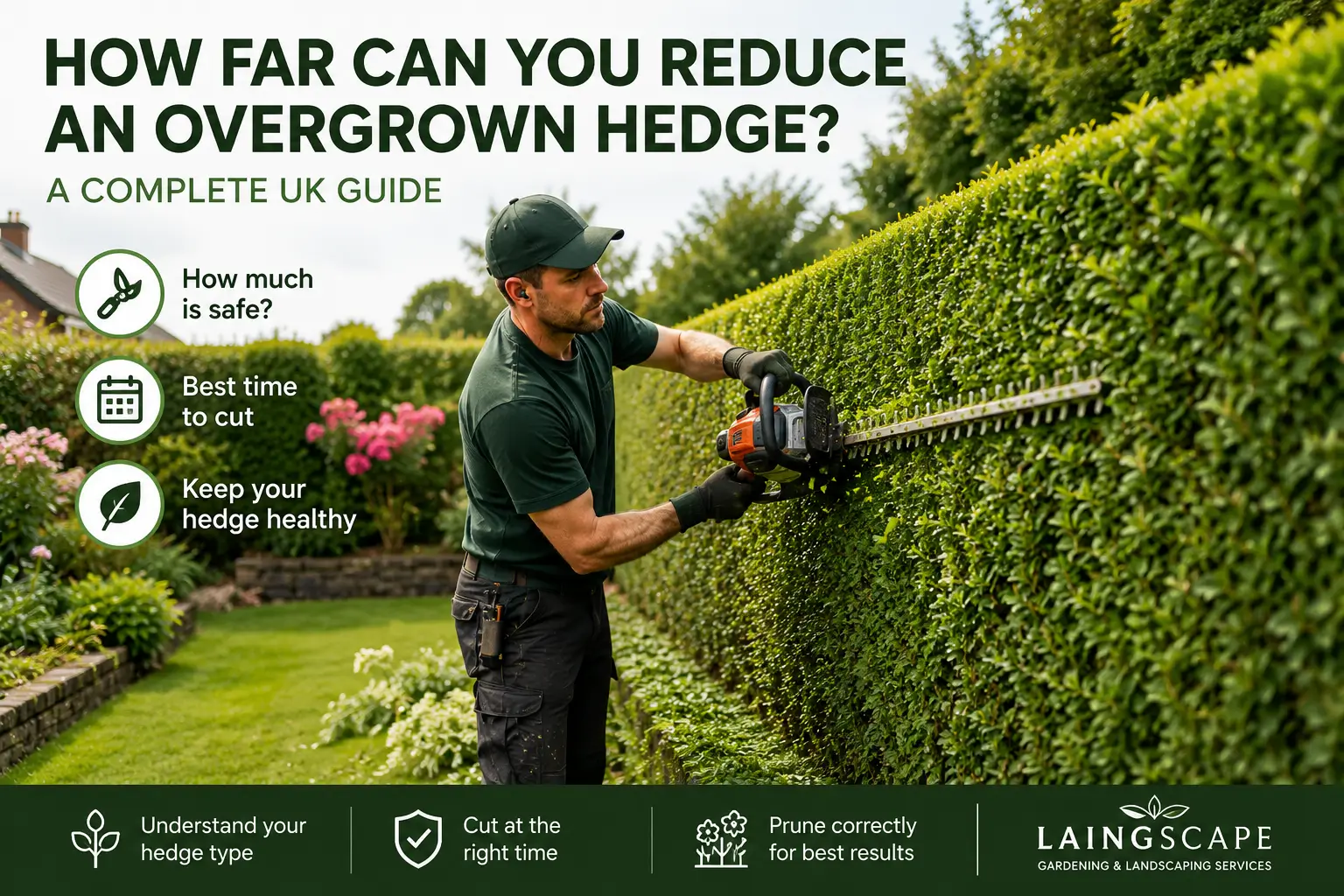
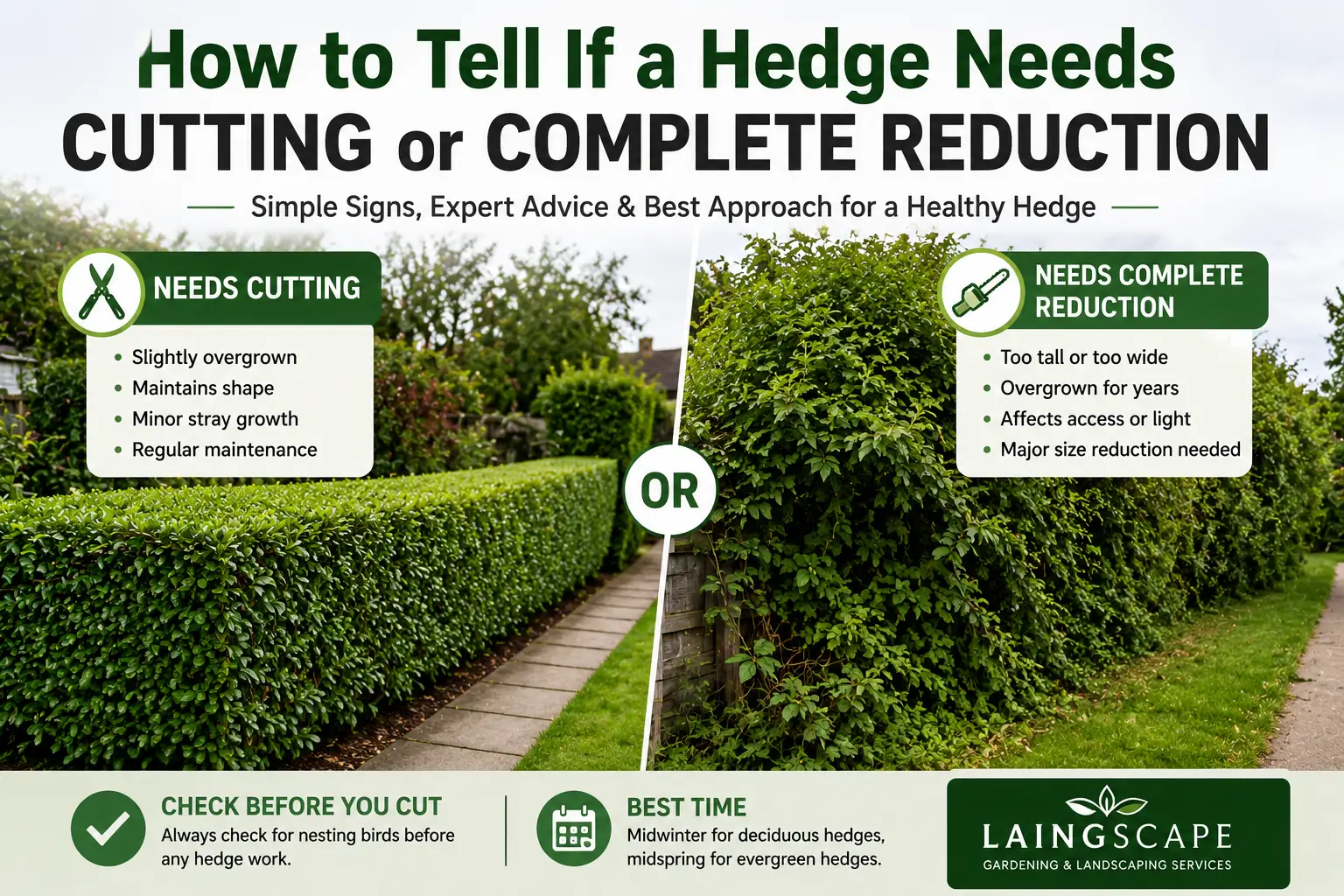
An overgrown hedge can quickly become more than just an untidy feature. It may block light, take up valuable garden space, spread over paths or become difficult to manage safely. But cutting it back as hard as possible is not always the right answer.
The important question is: How Far Can You Reduce an Overgrown Hedge?
The answer depends heavily on the type of hedge, how old it is, where the healthy growth is located and how much you need to remove. Some established hedges respond surprisingly well to hard pruning, while certain conifers can be permanently damaged if they’re cut into old, bare wood.
For homeowners in Cornwall, where gardens can experience mild, wet and windy conditions, understanding the right approach is particularly useful. This guide explains when a hedge can be reduced, how much is generally considered sensible, and when professional hedge cutting is the safer option.
How Far Can You Reduce an Overgrown Hedge?
There isn’t one universal percentage that applies to every hedge.
The RHS advises that several established hedging plants, including beech, box, hawthorn, holly, hornbeam, Lonicera nitida and yew, can tolerate reductions of around 50% in height and width in a single cut. More drastic renovation should generally be carried out gradually.
That distinction is important.
A mature deciduous hedge with healthy stems may recover well after significant pruning. Another hedge of a different species could develop permanent bare patches if treated in the same way.
Before cutting, identify the hedge species and inspect its internal structure.
What Happens If You Cut a Hedge Back Too Hard?
Heavy pruning removes a large amount of the plant’s leafy growth. While this can stimulate new shoots in suitable species, excessive cutting can leave a hedge stressed, bare or uneven.
Potential problems include:
- Large areas of exposed old wood
- Slow or uneven regrowth
- Permanent bare patches
- Reduced screening and privacy
- Increased stress during dry weather
- Damage to plants that cannot regrow from old wood
A hedge can also look considerably worse before it improves. RHS guidance notes that renovation pruning can create bare patches, although suitable hedges may gradually fill them in over subsequent growing seasons.
For that reason, drastic reduction should be planned rather than approached as a simple one-day trim.
Which Hedges Can Handle Hard Reduction?
The species makes a major difference.
Many established deciduous hedges respond well to renovation because they can produce new shoots from older wood. Examples include:
- Beech
- Hawthorn
- Hornbeam
- Holly
- Some box hedges
- Yew
- Certain other established deciduous shrubs
However, even within these groups, the health and age of the hedge matter.
A vigorous, established hedge with good root growth is generally a different proposition from a neglected hedge that is already weak or diseased.
If you’re uncertain about the species, it is better to identify it before making significant cuts.
Be Careful With Conifer Hedges
Conifer hedges require much more caution.
Many common conifers do not reliably produce new growth from old, bare wood. This includes popular screening plants such as Leyland cypress.
If these hedges are cut back beyond the green growth into older brown wood, they may fail to regenerate properly. The result can be permanent bare sections rather than the fresh green growth you were hoping for.
The RHS specifically warns that most conifers, with yew being an exception, do not respond well to renovation from old wood. For severely overgrown conifers, replacement may sometimes be a better option than attempting drastic pruning.
This is one of the strongest reasons not to apply the same pruning method to every hedge.
When Should an Overgrown Hedge Be Reduced?
Timing matters almost as much as technique.
For many deciduous hedges, major renovation is best carried out during the dormant period, typically in mid-winter. Evergreen hedges generally respond better to renovation in mid-spring, once the risk of severe frost has passed.
However, the ideal timing can vary according to the plant species and local conditions.
Before scheduling major work, consider:
- Hedge species
- Current growth condition
- Weather
- Frost risk
- Nesting birds
- Flowering patterns
- Recovery time
A professional assessment can help determine whether the hedge should be reduced immediately, lightly trimmed or renovated in stages.
What About Nesting Birds?
This is an important consideration that should never be overlooked.
Before carrying out hedge cutting, check carefully for active bird nests. Under the Wildlife and Countryside Act 1981, it is an offence to damage or destroy a wild bird’s nest while it is in use or being built. The usual nesting period is often considered to run from March to August, but nesting can occur outside those months.
That means the calendar alone isn’t enough.
If you discover an active nest, postpone the work until the nest is no longer in use.
This is particularly important when dealing with large, dense hedges where nests can be difficult to spot from outside.
When Should Reduction Be Done in Stages?
If your hedge needs a very significant reduction, staged renovation can be much safer than removing everything at once.
The RHS recommends spreading drastic renovation over two or three years for suitable hedges. This allows the plant time to recover between major cuts.
A staged approach might involve:
Year One
Reduce one side while leaving the other side and the height largely unchanged.
Year Two
Work on the opposite side once the hedge has had time to recover.
Year Three
Reduce the height and complete the renovation.
This approach is slower, but it can protect the hedge’s long-term structure and reduce the risk of severe stress.
How to Reduce an Overgrown Hedge Without Ruining Its Shape
The final shape matters too.
A common professional approach is to keep the hedge slightly narrower at the top than at the base. This allows more light to reach lower growth and helps prevent the upper section from becoming excessively heavy.
For long boundaries, maintaining a straight top can also be surprisingly difficult.
A string line or another suitable guide can help maintain consistency, particularly when reducing a hedge significantly.
Avoid removing large amounts simply because one section looks untidy. Stand back regularly and assess the overall shape before continuing.
Signs Your Hedge May Need Professional Attention
Some hedge jobs are straightforward, but large or heavily overgrown boundaries can become difficult and potentially unsafe.
Consider professional help if:
- The hedge is very tall
- You need ladders or specialist equipment
- The hedge is close to a road or pavement
- Large branches need removing
- The hedge has become extremely wide
- You cannot identify the species
- The hedge contains possible nesting sites
- You’re considering removing more than half its size
- Green waste will be substantial
The RHS also highlights that tall hedges can be difficult and unsafe to tackle without suitable equipment.
Professional equipment and experience can make a substantial difference to both safety and the final appearance.
Overgrown Hedge vs High Hedge: Are They the Same?
Not necessarily.
An overgrown hedge simply means that the hedge has grown beyond the size or shape you want to maintain.
A high hedge can have a more specific meaning under UK legislation. In England, the high hedge provisions generally relate to certain evergreen or semi-evergreen hedges over two metres high where they affect a neighbour’s enjoyment of their property.
The RHS explains that a high hedge complaint does not automatically mean the hedge must be reduced to two metres. A local authority may determine an appropriate height based on the circumstances.
If your hedge is causing a boundary or neighbour dispute, it’s sensible to check the relevant guidance rather than assuming a particular height is legally required.
How Regular Maintenance Prevents Major Hedge Reduction
The easiest way to deal with an overgrown hedge is often to prevent it becoming severely overgrown in the first place.
Regular trimming helps maintain the hedge’s shape and keeps growth dense. The RHS notes that formal hedges may need trimming several times a year, depending on the species and desired appearance.
A regular maintenance plan can include:
- Seasonal hedge trimming
- Height control
- Width management
- Removal of unwanted growth
- Checking for structural problems
- Clearing hedge trimmings
Regular attention also makes major renovation less likely, potentially saving time and money in the long term.
Need Help With an Overgrown Hedge in Cornwall?
If you’re still wondering How Far Can You Reduce an Overgrown Hedge?, the safest answer is to consider the species, condition and structure before deciding how aggressively to cut it.
Laingscape provides professional hedge cutting and garden maintenance services across Cornwall, including Truro, Newquay, Falmouth, St Austell, St Mawes and surrounding areas.
With more than 20 years of gardening and landscaping experience, we can assess an overgrown hedge and advise whether it needs routine trimming, reduction or a more carefully staged approach.
If the hedge forms part of a wider garden problem, our broader services can also include garden maintenance, clearance, landscaping and other outdoor improvements.
Need your hedge assessed? Contact Laingscape for a free, no-obligation quotation.
Phone: 07988 759149
Email: oliver@laingscape.co.uk
Address: Four Winds, Zelah, Truro TR4 9JD, United Kingdom
You can link this section naturally to your Hedge Cutting Services in Cornwall, Garden Maintenance Cornwall, Garden Tidy Up Cornwall and Contact pages.
Final Thoughts
So, How Far Can You Reduce an Overgrown Hedge? There is no single answer for every garden.
Suitable established hedges such as beech, hawthorn, hornbeam, holly and yew can often tolerate substantial renovation, with the RHS stating that some can be reduced by around 50% in height and width in one cut. More severe reductions should generally be staged.
Conifer hedges are different and may be permanently damaged if cut into old, bare wood. Timing, hedge species, plant health and nesting birds all need to be considered before major work begins.
If your hedge has become too large, don’t automatically reach for the hedge trimmer and remove everything at once. A considered approach can protect the plant, improve its appearance and restore a manageable size.
For homeowners across Cornwall, professional advice can be particularly useful when a hedge is tall, heavily overgrown or difficult to access. You can also explore our Contact page or relevant service pages to find out more about how we can help maintain and improve your outdoor space. You can also see examples of our work and customer experiences through our Google Business Profile and social media presence.
Frequently Asked Questions
How far can you safely reduce an overgrown hedge?
It depends on the species. Some established hedges can tolerate reductions of around 50% in height and width, while more drastic renovation may need to be carried out over several years.
Can I cut an overgrown hedge back to bare wood?
Not always. Many conifers will not reliably regrow from old, bare wood. Cutting them back too hard can leave permanent gaps or brown sections.
Can a hedge be reduced by half?
Some suitable established hedges can tolerate approximately 50% reduction in height and width in one cut. However, the species and condition of the hedge should always be considered first.
When is the best time to reduce an overgrown hedge?
For many deciduous hedges, major renovation is carried out in mid-winter. Evergreen hedges generally respond better to renovation in mid-spring, although species-specific guidance should be followed.
Can I cut a hedge during bird nesting season?
You should check carefully for active nests before cutting. It is an offence to damage or destroy a wild bird’s nest while it is in use or being built.
How do I reduce a very tall hedge?
Very tall hedges may need specialist equipment and a staged reduction. Avoid attempting difficult work from an unstable ladder, particularly near roads, paths or neighbouring properties.
What happens if I cut a Leylandii hedge too hard?
Leylandii generally do not regenerate from old brown wood. Severe cutting can therefore leave permanent bare areas. In some cases, replacement may be more appropriate than drastic renovation.
Should an overgrown hedge be reduced gradually?
If more than around half of a suitable hedge needs to be removed, gradual renovation over two or three years can give the plant more time to recover.
How often should a hedge be trimmed?
It depends on the hedge species and the appearance you want. Formal hedges may require several trims each year, while informal hedges can need less frequent attention.
Can Laingscape reduce an overgrown hedge in Cornwall?
Yes. Laingscape provides hedge cutting and garden maintenance services across Cornwall. Contact the team to discuss the hedge, its condition and the work required.