Skip to content
Choosing landscaping materials is about more than finding colours and finishes you like. The right materials should suit your garden’s layout, cope with local weather conditions, fit your budget and remain practical to maintain over time.
In Cornwall, these decisions can be particularly important. Coastal exposure, sloping gardens, wet weather and different soil conditions can all influence which materials work best for a particular outdoor space.
Whether you are planning a new patio, creating garden paths or redesigning your entire outdoor area, understanding the available options can help you make better decisions. This guide explains How to Choose Landscaping Materials for a Cornwall Garden, with practical advice on appearance, durability, drainage, sustainability and cost.
1. Consider Your Garden’s Location and Conditions
Before choosing materials, look at the garden itself. A sheltered garden in Truro may have different requirements from an exposed coastal property near Newquay or St Mawes.
Consider these factors first:
- Exposure: Coastal locations may experience stronger winds and salt exposure, so choose suitable materials and finishes.
- Rainfall: Surfaces need appropriate drainage to reduce standing water and slippery conditions.
- Ground conditions: Uneven, sloping or poorly draining ground may require additional preparation.
- Sunlight: Shaded areas can remain damp, affecting surface maintenance and plant growth.
- Access: Narrow paths, steps and entrances may influence material size and installation methods.
For example, a gravel path might work well in a lightly used garden, but a frequently used route may benefit from a firmer, more stable surface.
Assessing these conditions first helps you choose materials for their performance as well as their appearance.
2. Choose Natural Stone for a Timeless Finish
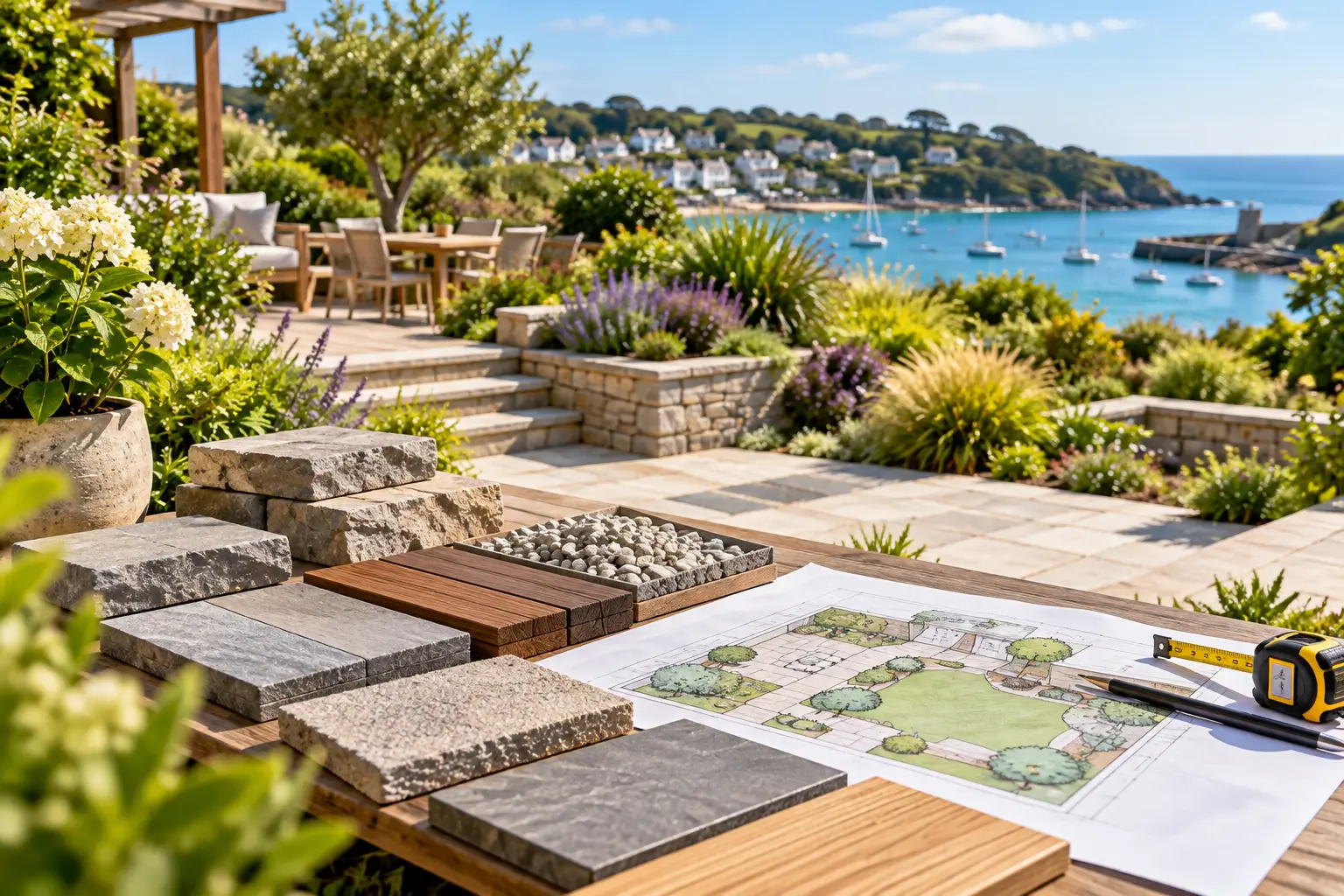
Natural stone is a popular option for patios, garden paths, steps and retaining walls. Its colours and textures can complement traditional Cornish properties as well as more contemporary homes.
Depending on the stone selected, you can create anything from a rustic garden setting to a clean, modern outdoor living area.
When comparing stone, consider:
- Surface texture and slip resistance.
- Colour variation and how it complements the property.
- Durability in the intended location.
- Cleaning and maintenance requirements.
- The cost of materials, delivery and installation.
Stone is not automatically suitable for every application. Some finishes may become slippery when wet, while others require careful installation to remain stable.
For a cohesive design, consider using the same stone or complementary finishes across patios, steps and boundary features. However, avoid covering every part of the garden with hard surfaces; planting and open areas help maintain visual balance.
3. Is Gravel a Good Choice for Garden Paths?
Gravel can be a versatile and relatively simple option for garden paths, decorative borders and selected outdoor areas. It comes in different sizes and colours, making it easy to match with stone, timber and planting.
It can also allow water to pass through the surface when the underlying construction and ground conditions are suitable.
However, gravel has limitations. Loose stones may shift underfoot, making some surfaces less suitable for wheelchairs, pushchairs or people who need a firm walking route.
Before choosing gravel, think about:
- The size and shape of the stones.
- How frequently the area will be used.
- The quality of the prepared base.
- Edging to keep the gravel contained.
- Weed management and occasional replenishment.
For a heavily used route, consider whether a more stable paving material would be practical. The Royal Horticultural Society’s guide to budget-friendly garden design offers further ideas for using materials economically.
4. Select Paving That Suits Your Outdoor Space
Paving is often a key feature of a garden because it creates space for dining, seating and entertaining. The material you choose should look appropriate alongside the house while meeting the practical demands of the site.
Concrete paving can provide a consistent finish, while natural stone offers more variation. Porcelain paving is another option, but its suitability depends on the product, surface finish and installation requirements.
Do not choose paving based on appearance alone. Ask about slip resistance, cleaning, weather suitability and the preparation needed beneath the surface.
Drainage is equally important. The RHS explains that permeable paving can help rainwater soak into the ground rather than simply running off a hard surface. Read its guidance on permeable paving.
For gardens in Cornwall, the right solution depends on the site’s slope, soil and existing drainage. If substantial paving is planned, seek appropriate advice before installation.
5. Use Timber for Warmth and Natural Character
Timber can soften the appearance of a landscaped garden. It works well for raised beds, screens, decking, seating and pergolas, creating a contrast with stone and other hard surfaces.
However, outdoor timber needs to be chosen carefully. Different species have different durability, maintenance and weather-resistance characteristics.
When comparing options, consider:
- Whether the timber is suitable for outdoor use.
- Its expected lifespan and maintenance requirements.
- Resistance to moisture and decay.
- The origin and certification of the wood.
- The finish and colour as it ages.
The RHS recommends looking for recognised forestry certification, such as FSC or PEFC, when purchasing relevant new wood products. Its advice on choosing sustainable garden materials also discusses reclaimed materials and sourcing choices.
In an exposed garden, timber should be specified and installed with the local conditions in mind. Appropriate fixings and construction details can make a significant difference to long-term performance.
6. Balance Cost, Quality and Long-Term Maintenance
The cheapest material is not always the most economical choice over time. A low initial price may be offset by frequent repairs, replacement or additional maintenance.
When planning your budget, consider the complete cost rather than the material alone.
Your estimate should account for:
- Materials and delivery.
- Ground preparation and excavation.
- Base layers and drainage.
- Installation labour.
- Edging, fixings and finishing details.
- Future cleaning, treatment or repairs.
For example, a lower-cost gravel path may suit a quiet corner of the garden, while a paved area near the back door may justify a more substantial installation because it receives daily use.
It is also worth keeping existing materials where practical. Reusing suitable paving, bricks or timber can reduce waste and help control costs.
7. Choose Sustainable Materials Where Possible
A well-designed garden should be attractive and practical without using more resources than necessary.
Consider reusing existing materials, buying reclaimed stone or bricks, selecting appropriately certified timber and sourcing heavy materials locally when suitable options are available.
You can also reduce the amount of hard landscaping by retaining planting beds, lawn areas and permeable surfaces where they suit the design.
Cornwall Council provides information on sustainable drainage systems, including how drainage can help manage surface water and reduce flood risk. The right approach for an individual garden will depend on its location, ground conditions and design.
Sustainability does not mean sacrificing appearance. A combination of natural stone, carefully chosen timber, gravel and planting can create an attractive outdoor space while making thoughtful use of materials.
8. Plan Your Landscaping Materials Around the Whole Design
Before purchasing materials, think about how each part of the garden will work together.
A useful starting point is to identify the main areas:
- Patio: Choose a surface that suits seating, dining and outdoor entertaining.
- Paths: Prioritise safe access, stability and practical maintenance.
- Boundaries: Consider timber screening, planting or appropriate wall materials.
- Raised beds: Select materials that suit the garden’s style and intended planting.
- Lawn: Decide whether natural turf or another finish best meets your needs.
- Drainage: Make sure water management is considered before surfaces are installed.
Try to limit the number of competing finishes. Two or three complementary materials can often create a more unified appearance than using a different surface in every section.
If your project involves several elements, professional planning can help ensure that levels, materials, access and drainage work together.
Need Help Planning Your Cornwall Garden?
Choosing materials is easier when you understand how they will perform within the finished design. Laingscape provides gardening and landscaping services across Cornwall, helping homeowners plan outdoor improvements around their property and requirements.
Whether you are considering a new patio, garden paths, improved planting areas or a wider transformation, our team can discuss your project and help you explore the next steps.
Explore our professional landscaping services in Cornwall or browse our full range of gardening and landscaping services.
Ready to improve your garden?
Contact Laingscape to discuss your plans and request a free, no-obligation quotation.
You can also visit our Google Business Profile to find business information. If you are comparing providers, read available customer feedback on Trustpilot where applicable and consider reviews alongside the scope of work, quotation and experience relevant to your project.
Conclusion
Knowing How to Choose Landscaping Materials for a Cornwall Garden can help you create an outdoor space that looks good, suits the local conditions and remains practical to maintain.
Start by considering your garden’s exposure, drainage, layout and intended use. Then compare materials for durability, appearance, installation costs and long-term maintenance. Natural stone, gravel, paving and timber can all work well when selected for the right purpose.
Most importantly, plan the garden as a whole rather than choosing each material in isolation. With thoughtful decisions and suitable preparation, you can create a cohesive outdoor space that works for your home and lifestyle.
Frequently Asked Questions
1. What are the best landscaping materials for a Cornwall garden?
Natural stone, suitable paving, gravel and durable outdoor timber are all potential options. The best choice depends on the garden’s exposure, drainage, intended use, budget and maintenance requirements.
2. Is natural stone suitable for coastal gardens?
It can be, provided the selected stone and installation method suit the site’s exposure and intended use. Check durability, surface texture and maintenance requirements before purchasing.
3. Is gravel a good option for garden paths?
Gravel can work well for decorative and lightly used paths. For frequently used routes, consider whether a firmer surface would provide better stability and accessibility.
4. Which paving is best for wet weather?
The right paving depends on its surface finish, slip resistance, installation and drainage. Choose a product suitable for outdoor use and make sure water can drain appropriately from the area.
5. How can I make garden landscaping more sustainable?
Consider reusing suitable materials, buying reclaimed products, selecting certified timber and keeping unnecessary hard surfaces to a minimum. Permeable surfaces and planting can also support sensible water management.
6. How do I choose landscaping materials on a budget?
Compare the full installed cost, including preparation, delivery, labour and future maintenance. Reusing existing materials and prioritising the most important areas can help manage spending.
7. Do landscaping materials need special maintenance in Cornwall?
Maintenance depends on the material and location. Coastal exposure, moisture, shading and regular use can affect cleaning and upkeep, so follow the manufacturer’s guidance and inspect surfaces periodically.
8. Should I choose materials before designing my garden?
It is better to consider the design and materials together. Planning both at the same time helps coordinate colours, levels, drainage, access and the overall appearance.
9. Can Laingscape help me choose materials for my garden?
Laingscape provides gardening and landscaping services across Cornwall. Contact the team to discuss your project, the improvements you are considering and whether professional landscaping support would be suitable.