Skip to content
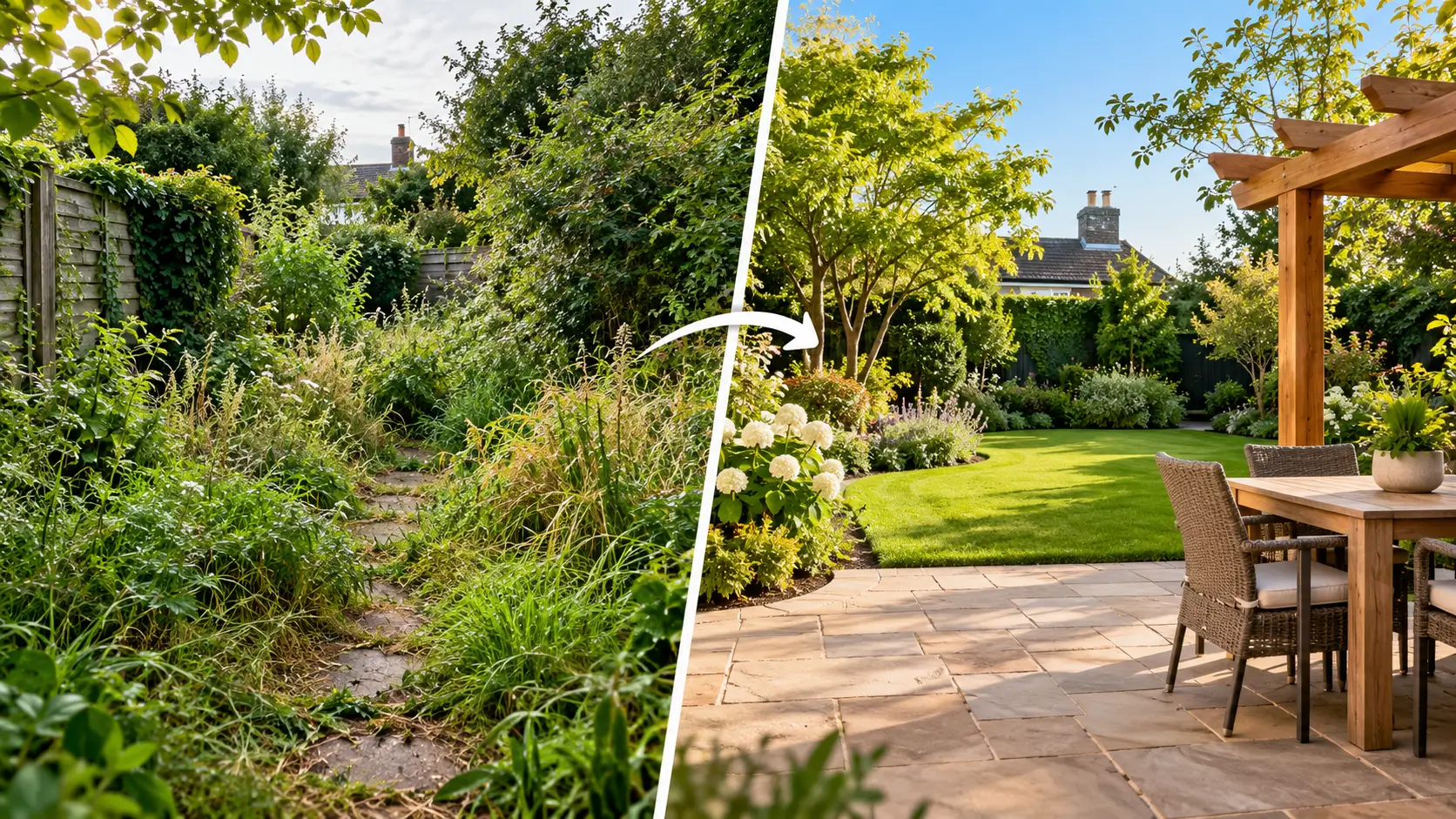
An overgrown garden can make you feel as though the only solution is to clear everything and start again. Long grass, tangled shrubs, weeds and hidden paths can quickly make even a well-established garden look difficult to manage.
But a complete redesign is not always necessary.
In many cases, an established garden already has mature plants, useful borders, good-quality lawn areas and features that are worth keeping. With the right approach, you can restore structure, improve usability and make the space easier to maintain without removing everything.
If you want to Manage an Overgrown Garden Without Starting Again, the key is to assess the garden carefully, work in stages and protect the parts that are already working well.
Start by Assessing the Garden
Before cutting everything back, take some time to understand what you already have.
An overgrown garden can hide healthy plants, established trees, paths, patios and other useful features. Clearing everything immediately can mean removing things that could have been restored.
Walk around the garden and identify:
- Areas of excessive grass growth
- Overgrown shrubs and hedges
- Weeds and unwanted growth
- Paths and patios hidden by vegetation
- Plants worth retaining
- Dead or damaged growth
- Areas with poor access
- Sections that may have drainage problems
It can also help to take photographs before you start. Once the initial clearance begins, having a record of the original layout can help you decide what should be improved.
The aim is not simply to make the garden look tidy for a few weeks. It is to understand what the space needs to become practical again.
Decide What to Keep, Restore and Remove
One of the most important decisions is deciding which plants and features deserve to stay.
Mature shrubs and established plants can add structure, privacy and character that would take years to recreate. If they are healthy but overgrown, pruning or renovation may be a better option than removal.
The RHS explains that renovation pruning can be suitable for some established shrubs, although the correct method and timing depend on the plant. RHS shrub renovation guidance
A simple three-category approach can help:
Keep: Healthy plants, useful structures and features that already suit the garden.
Restore: Overgrown lawns, shrubs, borders and areas that can be brought back into good condition.
Remove: Dead, damaged or unsuitable growth that no longer contributes to the garden.
This approach can save time and prevent unnecessary clearance.
Work Through the Garden in Stages
Trying to tackle an entire overgrown garden at once can quickly become overwhelming.
Instead, divide the work into manageable areas.
A sensible order could be:
- Clear access paths
- Open up the main entrance
- Bring the lawn under control
- Clear patios and seating areas
- Reduce overgrown borders
- Tidy hedges and boundaries
- Deal with less-used areas
Clearing access first makes the rest of the project easier. You have somewhere to walk, move equipment and remove garden waste.
More importantly, working gradually lets you see what the garden could become before making major decisions.
This is particularly useful when you want to Manage an Overgrown Garden Without Starting Again, because the garden often looks completely different once excessive growth has been reduced.
Bring an Overgrown Lawn Back Under Control
Long grass is often one of the first signs that a garden has been neglected.
However, an extremely overgrown lawn should not necessarily be cut down as short as possible in one go. Gradual reduction can be a more practical approach when grass has become particularly long.
Once the lawn is under control, assess its condition.
You may need:
- Regular mowing
- Lawn edging
- Weed control
- Feeding
- Aeration
- Overseeding
- Local repairs
- New turf in severely damaged areas
If the existing lawn still has good coverage, renovation may make more sense than replacing it.
For homeowners who need ongoing help, Laingscape provides Garden Maintenance in Cornwall, covering regular garden care and maintenance requirements.
Prune Overgrown Shrubs Carefully
Shrubs can become particularly difficult to manage when several seasons of growth have been left unchecked.
Branches may block paths, cover windows or spread into neighbouring plants. However, aggressive cutting is not appropriate for every shrub.
Before pruning, identify the plant if possible and check its specific requirements.
The RHS notes that some shrubs respond well to renovation pruning, while others require a more careful approach. RHS shrub renovation guidance
Where appropriate, pruning may involve removing:
- Dead branches
- Damaged growth
- Crossing branches
- Weak stems
- Congested areas
- Growth obstructing paths or structures
The objective is to improve the plant’s structure without unnecessarily damaging healthy growth.
Do Not Ignore Overgrown Hedges and Climbers
Hedges can quickly become wider and taller than intended when regular trimming is missed.
Some hedge plants can tolerate significant renovation, while others may not recover well if cut back into old, leafless wood. This is particularly important with certain conifers.
The RHS provides specific guidance on renovating established hedges and recommends considering the type of plant before carrying out major reductions. RHS hedge renovation guidance
Climbing plants can present a similar challenge.
Ivy and other vigorous climbers can spread across fences, walls and trees. They may sometimes be reduced gradually rather than completely removed.
Before clearing dense vegetation, also check for wildlife. Active wild bird nests are protected, so vegetation should be inspected carefully before substantial cutting takes place. RSPB guidance on birds, nests and nestboxes
Clear Weeds Without Stripping the Borders
Weeds can make an overgrown garden appear much worse than it actually is.
However, clearing every plant from a border is not always necessary.
First, identify what is growing. Some plants may have spread naturally but still provide value to the garden. Once unwanted growth has been identified, use an appropriate control method.
Depending on the area, this could include:
- Hand weeding
- Hoeing
- Cutting
- Mulching
- Removing established roots
- Repeated maintenance
The RHS outlines several non-chemical approaches to garden weed control, including physical removal and methods that suppress future growth. RHS non-chemical weed control
After clearing weeds, mulch can help create a cleaner finish and reduce the amount of exposed soil.
Restore the Garden’s Structure
Once excessive vegetation has been reduced, you can finally see the garden properly.
This is the point where you can assess whether the existing layout works.
Ask yourself:
- Is the lawn large enough?
- Are the borders too crowded?
- Can you move easily around the garden?
- Is the patio still suitable?
- Are paths wide enough?
- Does the garden have enough usable seating space?
- Are the boundaries providing the privacy you need?
You may discover that only a few changes are required.
For example, clearing one large border and reducing two overgrown shrubs could completely change the appearance of the garden without requiring a full redesign.
Improve the Garden Instead of Replacing It
Once the garden is under control, avoid immediately filling every available space.
Give yourself time to see how the restored garden works.
An area that previously looked unusable may become a natural seating area. A cleared section could work well for planting. An existing patio may turn out to be perfectly suitable once vegetation has been removed.
If you decide that larger improvements are needed, Laingscape offers broader Landscaping Cornwall services.
You can also consider adding specific features rather than redesigning the entire garden.
For example, a new pergola can create a defined outdoor seating or entertaining area. Laingscape provides Pergola Installation Cornwall and Pergola Installation Truro for homeowners looking to make better use of their outdoor space.
Think About the Driveway and Front Garden Too
An overgrown garden is not always limited to the rear outdoor space.
Front gardens can also become difficult to maintain when lawns, borders, hedges and access areas are neglected.
If the driveway is also showing signs of wear, restoring the surrounding garden can be a good opportunity to consider the entrance as a whole.
Laingscape provides Driveway Contractors Cornwall services, as well as Driveway Installation in Mid Cornwall and Driveway Installation Newquay.
For ideas about driveway improvements, you can also read:
- How Much Does a New Driveway Cost in Cornwall?
- When Should You Replace Your Driveway? Signs You Shouldn’t Ignore
- Driveway Materials Compared: Gravel, Block Paving or Resin
These considerations can help you decide whether the driveway needs maintenance, repair or more substantial replacement work.
Create a Maintenance Routine
Restoring an overgrown garden is only the first step.
Without regular care, lawns, borders, hedges and shrubs can quickly become difficult to manage again.
A maintenance routine might include:
- Regular lawn mowing
- Seasonal pruning
- Hedge trimming
- Weed control
- Border maintenance
- Leaf clearance
- Patio and pathway cleaning
- Seasonal garden tidy-ups
The right schedule depends on the garden itself. A small, simple garden may need relatively little attention, while a larger garden with mature planting may require more frequent visits.
For businesses and commercial properties, Laingscape also provides Commercial Garden Maintenance in Cornwall.
When Professional Garden Maintenance Makes Sense
Some gardens are simply too far gone for a quick weekend tidy-up.
Dense vegetation, large areas of long grass, overgrown hedges and years of accumulated garden waste can require considerable time and suitable equipment.
Professional help may be useful when:
- You do not have enough time to clear the garden
- Vegetation has become difficult to control
- You are unsure which plants can be safely pruned
- There is a large amount of green waste
- Access is difficult
- You want to restore the garden before making further improvements
- Ongoing maintenance has become difficult to keep up with
Laingscape has more than 20 years of experience in gardening and landscaping and works with homeowners across Cornwall.
A Practical Example of Garden Restoration
Imagine a garden where the lawn has become waist-high, shrubs have spread into the borders and weeds have started covering the patio.
It might look as though the whole garden needs to be removed.
But after bringing the lawn under control, clearing the patio and carefully pruning the suitable shrubs, the original layout may become visible again.
A mature shrub might turn out to be healthy. The patio may need nothing more than a thorough clean. The lawn may recover with proper maintenance.
Instead of starting again, you have restored what was already there.
That is often the most sensible approach to Manage an Overgrown Garden Without Starting Again.
Get Professional Help With Your Garden
If your garden has become difficult to manage, you do not necessarily need a complete redesign.
Laingscape can help with garden maintenance, clearance and wider landscaping improvements throughout Cornwall. With more than 20 years of experience, the team understands how to work with established outdoor spaces while improving their practicality and appearance.
You can explore the full range of Laingscape Services or learn more about the company on the About Laingscape page.
Before getting in touch, homeowners can also explore Laingscape’s customer feedback through its Google Business Profile and Trustpilot reviews.
Ready to Restore Your Garden?
If your garden has become overgrown, now is a good time to discuss what can realistically be restored rather than assuming everything needs to go.
Contact Laingscape for a free, no-obligation discussion about your garden maintenance or landscaping requirements.
You can contact Laingscape to discuss your project.
Laingscape
Four Winds, Zelah, Truro TR4 9JD, United Kingdom
Phone: +44 7988 759149
Email: oliver@laingscape.co.uk
Conclusion
An overgrown garden does not automatically mean you need to start again.
By assessing what you already have, retaining healthy plants, carefully reducing excessive growth and restoring the garden in stages, you can often create a much more attractive and usable outdoor space without removing everything.
The most effective approach is usually to work with the garden rather than against it.
If you want to Manage an Overgrown Garden Without Starting Again, start by identifying what is worth saving. A mature garden may already have the structure and character you need — it may simply need the right care to bring it back into view.
Frequently Asked Questions
Can I restore an overgrown garden without completely redesigning it?
Yes. Many gardens can be restored through selective clearance, pruning, lawn care, weed control and regular maintenance while retaining established plants and existing features.
What should I do first with an overgrown garden?
Begin with an assessment. Identify what you want to keep, what can be restored and what genuinely needs to be removed before carrying out major clearance.
Should I cut all overgrown shrubs back hard?
No. Different plants respond differently to pruning. Some shrubs tolerate renovation, while others can be damaged by severe cutting. Identify the plant and check its pruning requirements first.
When is the best time to prune an overgrown shrub?
It depends on the species. Many deciduous shrubs can be renovated during their dormant period, while evergreen plants can have different requirements. The RHS recommends checking the specific plant before major pruning. RHS shrub renovation guidance
How can I bring an overgrown lawn back under control?
Reduce excessive growth carefully rather than cutting extremely long grass down immediately. Once the lawn is manageable, assess whether it needs regular mowing, feeding, aeration, weed control or further renovation.
Can an overgrown garden still provide value for wildlife?
Yes. Established vegetation can provide habitat and shelter. However, check carefully for active bird nests before cutting dense vegetation. Wild bird nests are protected during the nesting period. RSPB birds, nests and nestboxes guidance
How often should an overgrown garden be maintained afterwards?
There is no single schedule for every garden. The ideal frequency depends on its size, planting, lawn growth and how quickly vegetation becomes untidy. Regular seasonal maintenance can prevent another major build-up.
Is professional garden maintenance worthwhile for an overgrown garden?
Professional help can be useful when vegetation is extensive, access is difficult or you do not have the time or equipment to complete the work safely and efficiently.
Can Laingscape help restore an overgrown garden in Cornwall?
Yes. Laingscape provides garden maintenance and wider landscaping services across Cornwall. Homeowners can contact Laingscape to discuss their requirements and request a free, no-obligation quote.
Can I add new landscaping after restoring an overgrown garden?
Yes. Once the existing garden has been brought under control, you can decide which improvements are genuinely needed. Options may include a pergola, driveway, patio, fencing, lawn improvements or other landscaping features.