Skip to content
A driveway is one of the first things people notice about your property. It improves kerb appeal, provides safe access for vehicles, and can even increase your home’s value. However, like any outdoor surface, driveways don’t last forever. Weather, heavy traffic, drainage issues and everyday wear gradually take their toll.
Many homeowners ask, When Should You Replace Your Driveway? The answer depends on several factors, including the driveway’s age, condition and the type of material used. While minor cracks or stains can often be repaired, widespread damage usually indicates it’s time for a complete replacement.
In this guide, we’ll explain the warning signs to look for, when repairs are enough, and when investing in a new driveway becomes the smarter long-term decision.
Why Driveways Eventually Need Replacing
No driveway is completely maintenance-free. Whether it’s block paving, gravel, tarmac or concrete, years of exposure to the British climate slowly weaken the surface.
Common causes of deterioration include:
- Heavy vehicle traffic
- Freeze and thaw cycles
- Poor drainage
- Tree root movement
- Ground settlement
- General ageing
Regular maintenance can extend a driveway’s lifespan, but eventually every surface reaches a point where replacement becomes more cost-effective than repeated repairs.
If you’re wondering When Should You Replace Your Driveway, understanding these natural ageing factors is the first step.
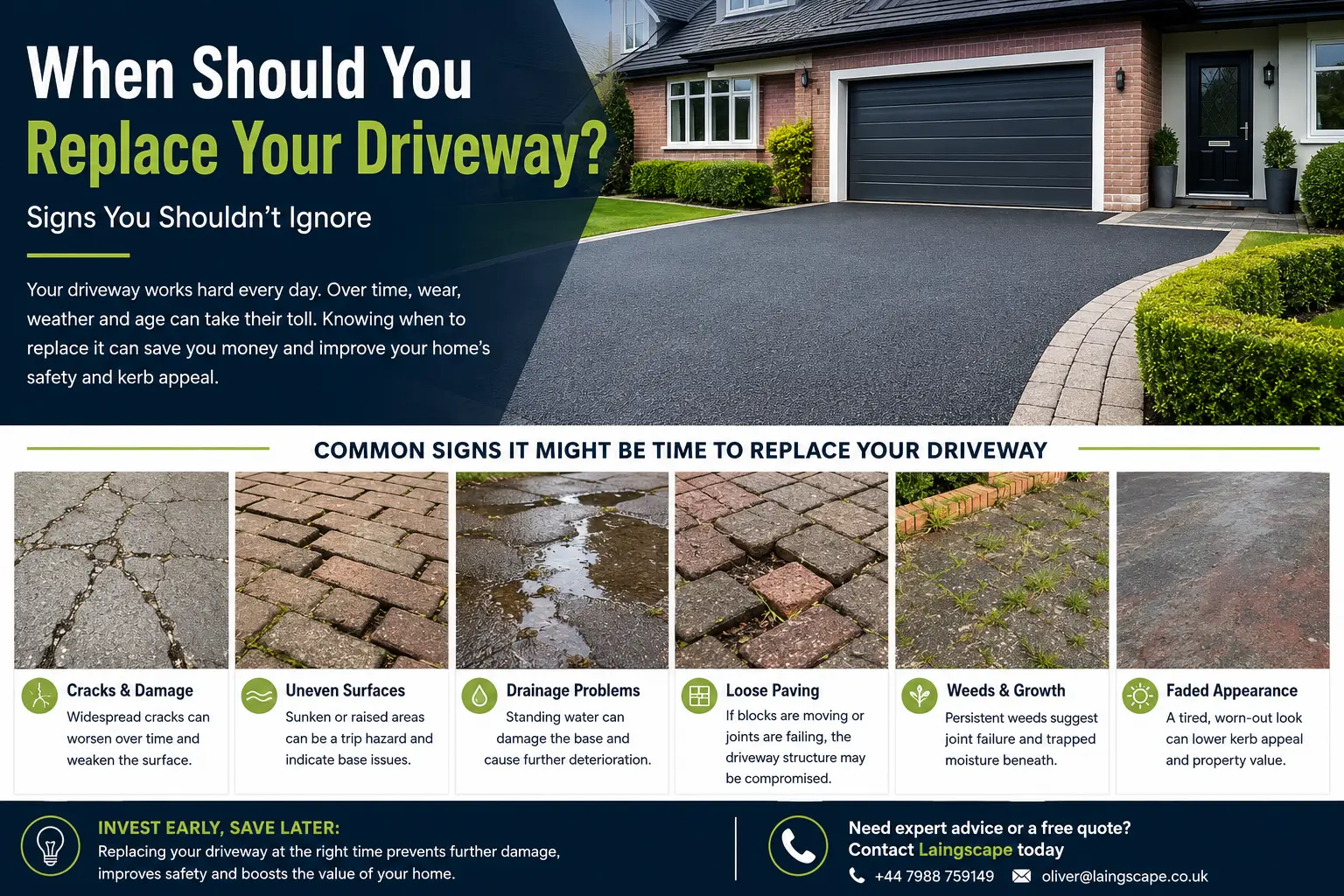
Visible Cracks That Continue to Spread
Small hairline cracks aren’t always a reason for concern. They often develop naturally as materials expand and contract with changing temperatures.
However, larger cracks should never be ignored.
Warning signs include:
- Long cracks across multiple sections
- Deep structural fractures
- Cracks that widen over time
- Multiple interconnected cracks
- Edges beginning to crumble
These problems often allow water to penetrate beneath the surface, weakening the foundations underneath.
Once the base layer becomes unstable, repairs usually become temporary rather than permanent.
Uneven or Sunken Areas
One of the clearest signs that replacement may be necessary is an uneven driveway.
Sunken sections often develop because the ground beneath the driveway begins to shift or wash away over time.
You may notice:
- Low spots collecting water
- Uneven paving blocks
- Sections sinking after heavy rain
- Vehicles rocking when parked
- Trip hazards when walking
Besides affecting appearance, uneven driveways can create safety risks for both vehicles and pedestrians.
Professional assessment can determine whether the issue is limited to a small section or affects the entire foundation.
Drainage Problems That Keep Returning
A well-built driveway should allow rainwater to drain efficiently without creating standing water.
If puddles remain long after rainfall, the drainage system may no longer be working properly.
Poor drainage can lead to:
- Surface erosion
- Moss and algae growth
- Slippery conditions
- Foundation damage
- Accelerated cracking
In many cases, recurring drainage issues indicate deeper structural problems beneath the driveway.
Simply filling cracks or resurfacing may not solve the underlying cause.
For properties in Cornwall, where rainfall can be frequent throughout the year, effective drainage is one of the most important factors in ensuring a driveway lasts for decades.
Your Driveway Has Reached the End of Its Lifespan
Every driveway material has an expected lifespan.
While regular maintenance can extend its life, age eventually catches up with every surface.
Typical lifespans include:
| Driveway Material | Average Lifespan |
|---|---|
| Gravel | Unlimited with maintenance |
| Block Paving | 25–30 years |
| Concrete | 25–40 years |
| Tarmac | 15–25 years |
| Resin Bound | 20–25 years |
If your driveway is approaching or exceeding its expected lifespan and requires frequent repairs, replacing it often provides better long-term value than continuing to patch individual problems.
Age alone doesn’t always mean replacement is necessary, but when combined with cracking, sinking or drainage issues, it’s usually a strong indication that the driveway has reached the end of its serviceable life.
Repairs Are Becoming More Frequent
One repair every few years is perfectly normal. However, if you’re arranging repairs every season, it’s worth asking whether you’re simply delaying the inevitable.
Repeated patching can quickly become more expensive than installing a completely new driveway.
Signs that repairs are no longer cost-effective include:
- The same cracks returning repeatedly
- Multiple patched areas across the surface
- Loose paving blocks appearing every year
- Ongoing drainage repairs
- Increasing maintenance costs
Rather than investing more money into temporary fixes, replacing the driveway may provide a safer, longer-lasting and more attractive solution.
Weed Growth Between Paving Blocks
If weeds continue to appear no matter how often you remove them, the problem may be more than simple garden maintenance.
Persistent weed growth often indicates that the joints between paving blocks have deteriorated, allowing seeds, moisture and organic matter to collect. While occasional weeds are normal, widespread growth can signal that the driveway’s structure is beginning to fail.
Common causes include:
- Jointing sand washing away
- Poor drainage
- Ageing block paving
- Cracked surfaces
- Inadequate maintenance
Re-sanding joints may solve minor issues. However, if weeds return repeatedly alongside loose paving or sinking sections, replacement may be the better long-term solution.
Loose or Moving Block Paving
Block paving is one of the UK’s most popular driveway materials because individual blocks can often be repaired or replaced. However, when large areas begin shifting, it’s usually a sign that the base underneath has weakened.
Signs to look for include:
- Wobbling paving blocks
- Uneven joints
- Raised or sunken sections
- Gaps appearing between blocks
- Movement when vehicles drive over the surface
These problems are often caused by poor installation, water damage or years of heavy use.
A professional inspection can determine whether the issue is isolated or whether the driveway requires complete reconstruction.
Faded Appearance and Reduced Kerb Appeal
Sometimes a driveway remains structurally sound but no longer complements the appearance of your property.
Years of exposure to sunlight, rain and vehicle traffic gradually fade colours and wear away surface finishes.
You may notice:
- Permanent staining
- Moss and algae discolouration
- Worn block colours
- Chipped edges
- A tired overall appearance
While cleaning and sealing can improve some surfaces, an older driveway may still look dated.
If you’re planning to improve your property’s appearance or increase its value before selling, replacing an ageing driveway can make an immediate visual impact.
Repair or Replace? How to Make the Right Decision
One of the most common questions homeowners ask is whether repairs are enough or whether complete replacement offers better value.
In many cases, small repairs remain the sensible option.
Repairs are usually suitable when:
- Damage affects only a small area.
- The foundations remain stable.
- Drainage is working correctly.
- Cracks are minor and not spreading.
Replacement is often recommended when:
- Multiple repairs have already been carried out.
- The driveway is nearing the end of its lifespan.
- Large areas are sinking or cracking.
- Drainage problems continue to return.
- Foundation damage is present.
If you’re still asking When Should You Replace Your Driveway, consider both the repair costs and the long-term reliability of the existing surface. Replacing it once may be more economical than paying for repeated repairs over several years.
Choosing the Right Replacement Driveway
If replacement is the best option, selecting the right material is just as important as choosing the right installer.
Popular driveway options include:
Block Paving
A timeless choice offering excellent durability, easy repairs and a wide range of colours and patterns.
Resin Bound
Ideal for homeowners seeking a modern appearance with low maintenance and excellent drainage.
Tarmac
A practical and cost-effective option for larger driveways with heavy daily use.
Gravel
Affordable, permeable and suitable for rural or traditional properties.
Concrete
Strong, long-lasting and capable of handling regular vehicle traffic when professionally installed.
The best material depends on your budget, property style, maintenance preferences and intended use.
Why Professional Installation Makes a Difference
A driveway is only as strong as the foundation beneath it.
Even premium materials can fail prematurely if they’re installed on poorly prepared ground or without proper drainage.
Professional installation includes:
- Correct excavation depths
- Stable sub-base construction
- Effective drainage solutions
- Accurate levelling
- Proper compaction
- Quality finishing
These stages help ensure your new driveway remains attractive, safe and durable for many years.
For homeowners in Cornwall, local knowledge also plays an important role. Understanding soil conditions, rainfall and drainage requirements allows experienced contractors to recommend solutions suited to the local environment.
Driveway Replacement for Homes Across Cornwall
Cornwall’s changing weather, coastal conditions and seasonal rainfall place additional demands on outdoor surfaces.
At Laingscape, we design and install driveways built to withstand these local conditions while complementing your property’s appearance.
Whether you’re replacing an ageing driveway or planning a completely new installation, our experienced team provides honest advice, quality workmanship and tailored solutions for every project.
Ready to Upgrade Your Driveway?
If your driveway is showing signs of age, damage or poor drainage, now is the ideal time to invest in a long-lasting solution. At Laingscape, we provide professional driveway installation services tailored to your property’s style, budget and practical needs.
Whether you’re replacing cracked block paving, worn tarmac or an uneven concrete surface, our experienced team will guide you through every stage of the project—from the initial site visit to the finished installation.
We pride ourselves on delivering quality workmanship, honest advice and excellent customer service throughout Mid Cornwall.
Many of our customers discover us through our Google Business Profile and return after reading our positive Facebook Page review, giving them confidence that they’re choosing a trusted local contractor.
If you’re considering a new driveway, we’d be happy to discuss your ideas and provide a free, no-obligation quotation.
Phone: +44 7988 759149
Email: oliver@laingscape.co.uk
You can also explore our Driveway Contractors Cornwall, Driveway Installation in Mid Cornwall, and Contact pages to learn more about our services and request your free quotation.
Conclusion
Knowing When Should You Replace Your Driveway can save you money, improve safety and enhance the appearance of your home. While small cracks, isolated repairs and minor wear can often be addressed through maintenance, recurring structural issues usually indicate that replacement is the better long-term investment.
Signs such as widespread cracking, sinking areas, drainage problems, loose paving blocks and repeated repairs should never be ignored. Replacing an ageing driveway not only improves kerb appeal but also provides a stronger, safer and more durable surface for years to come.
Choosing experienced professionals ensures your new driveway is built on solid foundations with proper drainage and high-quality materials, giving you confidence that your investment will stand the test of time.
If you’re unsure whether your existing driveway can be repaired or should be replaced, seeking professional advice is always worthwhile. An expert assessment can help you choose the most practical and cost-effective solution for your property.
Frequently Asked Questions
Should I repair my driveway or replace it?
If the damage is limited to a small area and the foundation remains stable, repairs are usually sufficient. However, widespread cracking, sinking or recurring drainage issues often make replacement the better long-term option.
How long should a driveway last?
The lifespan depends on the material and maintenance. Block paving typically lasts 25–30 years, concrete can last 25–40 years, while tarmac usually lasts between 15 and 25 years.
What are the first signs that a driveway needs replacing?
Large cracks, uneven surfaces, loose paving, standing water, recurring repairs and widespread wear are all common indicators that replacement may be necessary.
Can poor drainage damage a driveway?
Yes. Water that collects beneath or on the surface can weaken the foundations, cause cracking, encourage weed growth and shorten the driveway’s lifespan.
Is replacing a driveway worth the investment?
In many cases, yes. A professionally installed driveway improves safety, enhances kerb appeal and can increase the overall value of your property.
Which driveway material lasts the longest?
Concrete and high-quality block paving are among the longest-lasting options when professionally installed and properly maintained. The best choice depends on your property’s needs and budget.
Does a new driveway require planning permission?
Most replacement driveways do not require planning permission if they use permeable materials or suitable drainage. However, regulations can vary depending on the project. You can find guidance through the UK Planning Portal.
How long does driveway installation usually take?
Most domestic driveway installations are completed within several days to one week, depending on the size of the project, chosen material and weather conditions.
Can a damaged driveway reduce property value?
Yes. A worn, cracked or uneven driveway can negatively affect first impressions and may reduce kerb appeal. Replacing it often enhances the appearance and desirability of your property.
Why choose Laingscape for driveway installation?
With over 20 years of experience serving Mid Cornwall, Laingscape provides professional workmanship, honest advice and high-quality driveway installations tailored to each customer’s requirements.